
Buying Guide & Product Information
Bulk Gutter Guards for K-Style Gutters
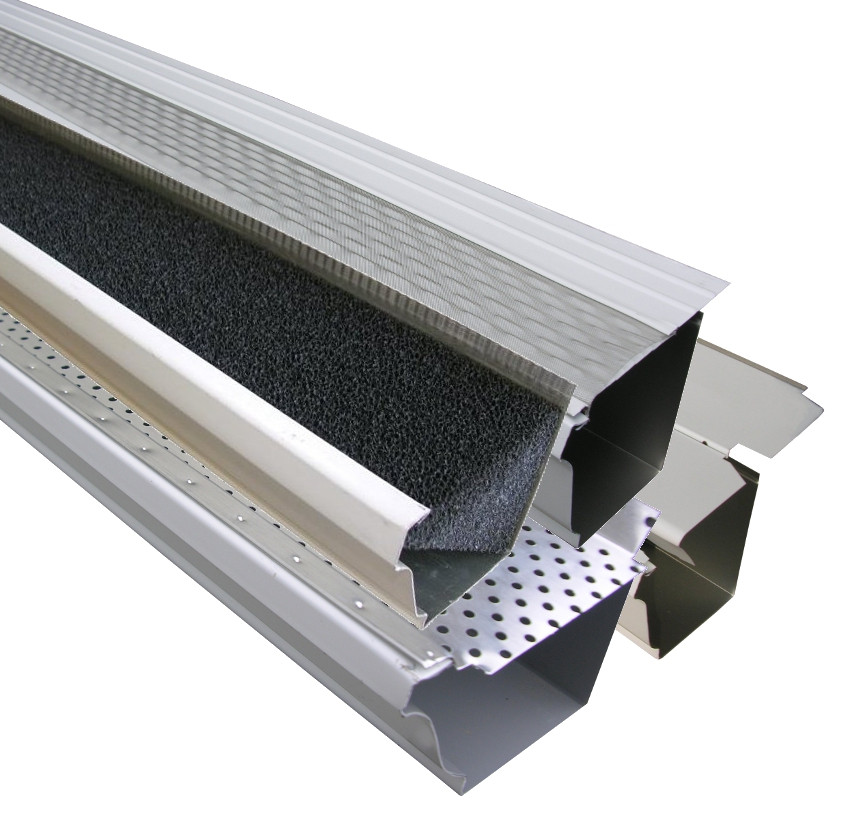
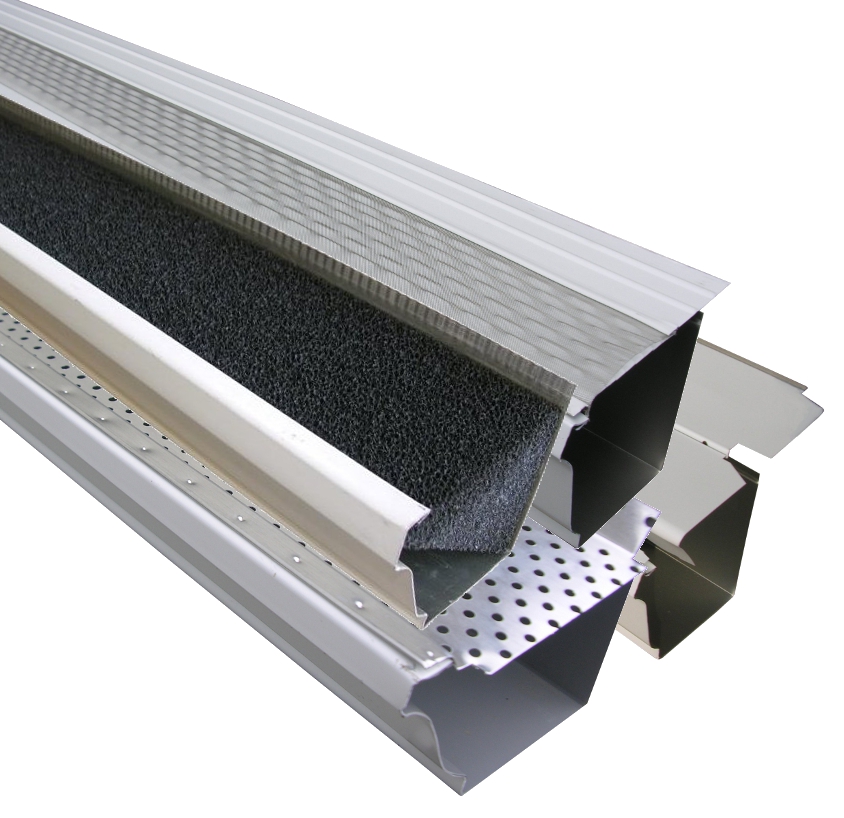
Bulk gutter guards are packaged quantities of screen and formed-panel products used to reduce the amount of leaves, seed pods, twigs, and other debris entering compatible gutters. They are suited to larger installations, multiple gutter runs, recurring contractor work, and inventory stocking.
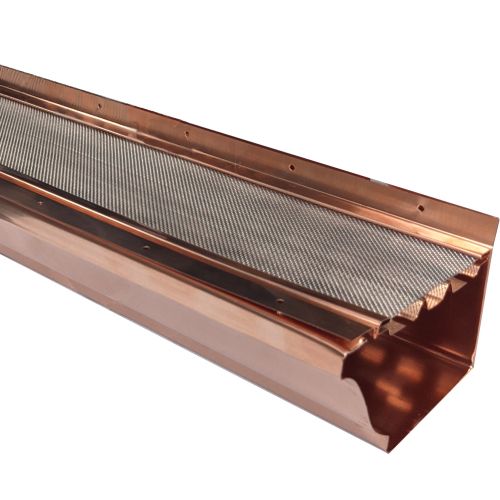
This category includes aluminum and natural copper guards for select 5-inch and 6-inch K-style gutter systems. Available products include drop-in screens and formed louvered panels. Guard design, material, gutter size, section length, finish, color, installation method, and quantity per box depend on the selected product.
Gutter guards reduce debris entry but do not eliminate gutter maintenance. Fine debris, roof granules, pollen, pine needles, and decomposed organic material can collect on the guard surface or inside the gutter. Outlets, elbows, and downspouts still require periodic inspection.
Types of Bulk Gutter Guards
Available bulk guard configurations include:
- K-style drop-in gutter screens
- Formed louvered gutter-guard panels
- Mill finish aluminum screens
- Painted aluminum panels
- Natural copper screens
- Natural copper formed panels
- Separate 5-inch and 6-inch K-style sizes
These products cover the gutter opening in different ways and do not share one universal installation method.
Drop-in screens clip to the gutter’s front bead and rest on compatible hangers. Formed panels extend across the gutter opening and use product-specific roof-edge positioning and attachment requirements.
K-Style Drop-In Gutter Screens
The drop-in screen is made for compatible K-style gutters. It has a reinforced front edge that clips to the front gutter bead while the screen rests on the existing gutter hangers.
Available configurations include:
- 5-inch x 36-inch sections
- 6-inch x 36-inch sections
- Mill finish aluminum
- Natural copper
- Boxes containing 25 sections
A box of twenty-five 3-foot sections provides 75 nominal linear feet before cuts, corners, short runs, or unusable offcuts are deducted.
The drop-in design does not require separate fasteners when installed in the supported gutter configuration. That no-fastener method applies specifically to the drop-in screen and should not be applied to formed panels or other guard styles.
Before ordering, confirm:
- K-style gutter profile
- 5-inch or 6-inch gutter size
- Front-bead shape and condition
- Existing hanger type and location
- Aluminum or natural copper material
- Number of sections required
- Total usable coverage
The front bead and hangers must be secure enough to support the screen. Loose hangers, damaged gutter beads, or distorted gutters should be corrected before installation.
Formed Louvered Gutter Guards
Formed louvered guards cover more of the gutter opening than an open drop-in screen. Water enters through formed slots or louvers in the panel while larger debris remains on the upper surface.
Available Leaf Out configurations include:
- 5-inch K-style gutter guards
- 6-inch K-style gutter guards
- 4-foot sections
- Painted aluminum
- Natural copper
- Boxes containing 25 sections
A box of twenty-five 4-foot sections provides 100 nominal linear feet before cuts, overlaps, corners, and installation allowances are deducted.
The panel’s position relative to the roofing, fascia, gutter bead, and hangers must follow the product installation requirements. It should not be installed beneath or against roofing in a way that interferes with the roof covering, flashing, or water-shedding details.
Aluminum Gutter Guards
Aluminum guards are available in Mill finish aluminum and Painted aluminum, depending on the product.
The drop-in screen uses Mill finish aluminum. Formed aluminum panels may be offered in select painted colors. Finish and color should be selected from the options provided for the specific guard style.
When selecting aluminum guards, confirm:
- Guard design
- K-style gutter size
- Mill finish or painted finish
- Available color
- Section length
- Sections per box
- Installation position
- Required accessories
Painted aluminum should be protected from scratching during transportation, cutting, and installation. Mill finish aluminum has an unfinished metallic appearance and should not be confused with galvanized steel, Galvalume, or Paint Grip steel.
Natural Copper Gutter Guards
Natural copper versions coordinate with compatible natural copper K-style gutter systems. Available products include drop-in screens and formed louvered panels.
Natural copper begins with a bright metallic appearance and gradually darkens as it weathers. It can eventually develop a patina. A new copper guard may not immediately match an older gutter because the two products have different ages and exposure histories.
Natural copper should not be confused with:
- Copper Penny aluminum
- Designer Copper aluminum
- Copper-colored Painted aluminum
- Freedom Gray copper
- Brass
- Preweathered zinc
Before ordering copper guards, confirm:
- Natural copper construction
- 5-inch or 6-inch K-style gutter
- Guard style
- Section length
- Box quantity
- Hanger and roof-edge compatibility
- Material of adjoining fasteners and components
Selecting the Correct Gutter Size
The guard must match the nominal K-style gutter size and actual gutter opening.
A 5-inch guard and a 6-inch guard have different widths and engagement points. They should not be compressed, stretched, or reshaped for a different gutter size.
Measure the gutter when:
- The original manufacturer is unknown
- The gutter was formed on site
- The gutter has been bent or repaired
- The front bead is damaged
- The nominal size is uncertain
- Existing accessories affect the opening
Check the top opening, front-bead shape, back-wall position, hanger clearance, and available space beneath the roof edge.
K-Style Profile Compatibility
K-style describes the gutter profile, not its material. A K-style gutter has a formed front face, front bead, flat back wall, and comparatively flat bottom.
The guards discussed here are shaped for that profile. They should not be treated as Half round gutter guards merely because the gutter and guard share the same nominal size.
Half round gutters have a curved trough and different bead and hanger arrangements. They require guard products designed for the Half round profile.
Choosing Between Screens and Formed Panels
Drop-in screens and louvered panels provide different coverage and installation characteristics.
Drop-in screens:
- Use an open screen pattern
- Clip to the front gutter bead
- Rest on compatible gutter hangers
- Use 3-foot sections
- Are available in Mill finish aluminum and natural copper
- Can be lifted for gutter access when installed as designed
Formed louvered panels:
- Cover more of the gutter opening
- Admit water through formed slots
- Use 4-foot sections
- Are available in Painted aluminum and natural copper
- Require product-specific roof-edge positioning
- May require different corner and transition treatment
The appropriate design depends on gutter size, debris conditions, roof-edge construction, appearance, and maintenance access.
Debris and Site Conditions
Different guard openings respond differently to the debris around a building.
Relevant debris includes:
- Broad leaves
- Small leaves
- Pine needles
- Seed pods
- Acorns
- Flowering-tree debris
- Roof granules
- Pollen
- Moss
- Windblown material
An open screen can reduce larger debris while allowing some smaller material through. A formed panel covers more of the opening but can collect debris near the louvers.
No guard prevents every clog or overflow condition. Performance also depends on the roof area, roof pitch, gutter size, outlet capacity, concentrated valley flow, installation quality, and maintenance.
Roof-Edge and Fascia Conditions
Inspect the roof edge before selecting a guard.
Consider:
- Roofing material
- Roof pitch
- Shingle or panel overhang
- Drip-edge position
- Fascia condition
- Gutter height
- Existing flashing
- Hanger position
- Clearance above the gutter
- Inside and outside corners
- Roof valleys
A drop-in screen depends primarily on the gutter bead and hangers. A formed panel interacts more directly with the roof edge and requires additional compatibility review.
Do not force a panel beneath roofing, lift roof materials without an appropriate procedure, or alter flashing solely to make an incompatible guard fit.
Coordination With Gutter Hangers
Gutter guards and hangers must work together.
For drop-in screens, confirm:
- The screen can rest on the hangers.
- The hanger does not project above the intended screen position.
- The front bead securely accepts the reinforced screen edge.
- Hanger screws or clips do not obstruct the screen.
For formed panels, confirm:
- Hangers do not interfere with the panel.
- Required fasteners remain accessible.
- The guard can be removed when gutter access is needed.
- The panel does not displace or weaken the hanger system.
Do not remove required hangers to create space for a gutter guard. A guard does not provide structural gutter support.
Corners, Ends, and Transitions
Guard quantities must account for more than straight gutter length.
Additional fitting may be required at:
- Inside miters
- Outside miters
- End caps
- Roof valleys
- Short gutter runs
- Changes in roof elevation
- Changes in gutter size
- Outlet locations
- Adjoining roof sections
Depending on the guard, these areas may require cut sections, overlaps, field-fitted corners, end treatment, or separate accessories.
Accessories and corner methods for one guard style should not be assumed to fit another.
Measuring for Bulk Orders
Measure each gutter run separately and record:
- Length of each straight run
- Gutter size
- Guard style
- Section length
- Sections supplied per box
- Inside and outside corners
- Gutter ends
- Roof valleys
- Required joints or overlaps
- Additional sections for cuts and replacements
For drop-in screens:
- Each section is 3 feet long.
- Each box contains 25 sections.
- Each box provides 75 nominal linear feet.
For Leaf Out panels:
- Each section is 4 feet long.
- Each box contains 25 sections.
- Each box provides 100 nominal linear feet.
Nominal footage is not the same as guaranteed installed coverage. Cuts, corners, overlaps, short runs, and unusable offcuts reduce the final coverage.
Ordering Considerations
Before placing a bulk order, confirm:
- Guard style
- Aluminum or natural copper material
- 5-inch or 6-inch K-style size
- Section length
- Mill finish, painted finish, or natural copper
- Color where applicable
- Sections per box
- Number of boxes required
- Roof-edge compatibility
- Corner and accessory requirements
Keep different sizes, materials, and guard styles separated in storage and on the jobsite. A 5-inch and 6-inch section can appear similar when stacked but will not fit the same gutter.
Installation Planning
Before installing gutter guards:
- Clean the gutter and downspouts.
- Remove debris from outlets and elbows.
- Repair loose, bent, or leaking gutter sections.
- Confirm the K-style profile and gutter size.
- Inspect the front bead and hanger system.
- Identify corners, valleys, ends, and roof transitions.
- Confirm the selected guard material and finish.
- Review the guard’s attachment method.
- Test-fit a section before completing the entire run.
Use the installation method intended for the selected guard. Do not apply the drop-in screen method to a formed panel.
Gutters and gutter guards are not ladder supports, handholds, work platforms, or fall-protection anchors.
Cutting and Handling
Sections may require cutting at ends, corners, and transitions.
Use tools appropriate for the guard material and construction. Avoid damaging the reinforced edge of a screen or deforming the louvers of a formed panel.
During handling:
- Protect painted surfaces from abrasion.
- Keep panels and screens properly supported.
- Remove sharp burrs after cutting.
- Keep cut pieces organized by location.
- Avoid crushing openings or attachment edges.
- Keep incompatible metal debris away from natural copper.
Use appropriate personal protective equipment when cutting or handling sheet-metal products.
Material Compatibility
Coordinate the guard with the gutter, hangers, fasteners, flashing, and adjoining roof-edge metals.
Natural copper guards are intended for compatible copper systems. Aluminum guards should not automatically be installed on natural copper gutters simply because the dimensions fit.
Consider:
- Direct contact between different metals
- Fastener material
- Roof runoff
- Drip-edge material
- Flashing material
- Existing coatings
- Environmental exposure
Dimensional fit and material compatibility are separate requirements.
Inspection and Maintenance
Inspect gutter guards and the complete drainage system periodically and after heavy debris events.
Look for:
- Leaves covering the guard
- Pine needles lodged in openings
- Roof granules and fine sediment
- Organic buildup
- Shifted or detached sections
- Open gaps between sections
- Bent screens or panels
- Damaged paint
- Restricted outlets
- Standing water
- Overflow marks
- Loose gutters or hangers
- Downspout restrictions
Cleaning methods depend on the guard style. Drop-in screens can be lifted where access is needed. Formed panels require the removal or access method intended for that product.
Avoid bending reusable sections or damaging the front gutter bead during maintenance.
Storage
Store bulk gutter guards in a clean, dry location protected from impact, moisture, chemicals, and mixed inventory.
Label packages by:
- Product name
- SKU
- Guard style
- 5-inch or 6-inch size
- Aluminum or natural copper
- Finish or color
- Section length
- Box quantity
Do not stack heavy products on screens or formed panels. Protect Painted aluminum from abrasion and natural copper from wet steel debris or other contaminants.
Frequently Asked Questions
What types of bulk gutter guards are available?
Available products include K-style drop-in screens and formed louvered panels in aluminum and natural copper.
What gutter sizes are available?
Available sizes include 5-inch and 6-inch K-style gutter guards.
Can these guards be used with Half round gutters?
No. These products are formed for K-style gutters. Half round gutters require profile-specific guards.
How long are the drop-in screen sections?
Each drop-in screen section is 3 feet long.
How many drop-in screens are included in a box?
The ordering unit contains 25 sections, providing 75 nominal linear feet before cuts and installation allowances.
How long are the Leaf Out sections?
Each Leaf Out panel is 4 feet long.
How many Leaf Out panels are included in a box?
The ordering unit contains 25 sections, providing 100 nominal linear feet before cuts, overlaps, and installation allowances.
Do drop-in screens require fasteners?
No. The supported drop-in screen clips to the front bead and rests on compatible gutter hangers without separate fasteners.
Do all gutter guards install without fasteners?
No. The installation method depends on the guard. Formed panels use different roof-edge and attachment requirements.
Are aluminum guards painted?
Some are. Drop-in screens are available in Mill finish aluminum, while formed aluminum panels are available in select painted colors.
Are the copper guards made from natural copper?
Yes. The copper versions are natural copper rather than Copper Penny aluminum or another copper-colored finish.
Will new copper guards match older copper gutters?
No immediate match is guaranteed. New natural copper is brighter, while older copper may have darkened or developed a patina.
Can aluminum guards be installed on copper gutters?
No general compatibility should be assumed. Material contact, fasteners, runoff, and the complete system must be evaluated before aluminum and natural copper are combined.
Can gutter guards replace damaged hangers?
No. Gutter guards do not support the gutter. Repair or replace damaged hangers before installing the guard.
Do gutter guards prevent every clog?
No. They reduce debris entry, but fine material can still collect on the guard, inside the gutter, or around the outlet.
Are gutter guards maintenance-free?
No. The guard surface, gutter interior, outlets, elbows, and downspouts still require inspection and cleaning.
How should the required number of boxes be calculated?
Use the total gutter length, section length, sections per box, and allowances for corners, overlaps, cuts, and unusable offcuts.