
Buying Guide & Product Information
Downspout Buying Guide: Shapes, Sizes, Materials, and Drainage Connections
Gutter downspouts carry rainwater from the gutter outlet down the side of a building and toward the intended drainage or discharge location. They form the vertical portion of the roof drainage system and work with gutter outlets, elbows, offsets, brackets, tile adapters, splash blocks, underground drainage connections, and other components.
A downspout should not be selected by appearance alone. The shape, dimensions, material, finish, outlet, fittings, section lengths, number of downspouts, and final discharge method must work together as a complete drainage path.
This category includes rectangular, plain round, and round corrugated downspouts in multiple sizes, materials, colors, and finishes. It also includes downspout accessories and tile adapters for completing, supporting, routing, protecting, maintaining, or connecting the downspout system.
How a Downspout System Works
Rainwater collected by the gutter enters the downspout through a gutter outlet. Elbows or offsets route the water from the roof edge toward the wall, and straight downspout sections carry it toward the ground.
The downspout is secured to the building with compatible brackets, straps, or pipe clips. At the bottom of the run, water may be directed through an elbow, extension, splash block, diverter, tile adapter, or another designed drainage connection.
A complete downspout path may include:
- Gutter outlet
- Upper elbows or offset
- Straight downspout sections
- Downspout connectors where required
- Downspout brackets, straps, or pipe clips
- Lower elbow or extension
- Diverter or rainwater collection connection
- Tile adapter
- Splash block
- Ground-level or underground drainage system
The downspout only carries water to its final connection or discharge point. Proper drainage away from the building also depends on where that water is released and how the surrounding grade or drainage system handles it.
Choosing a Downspout Shape
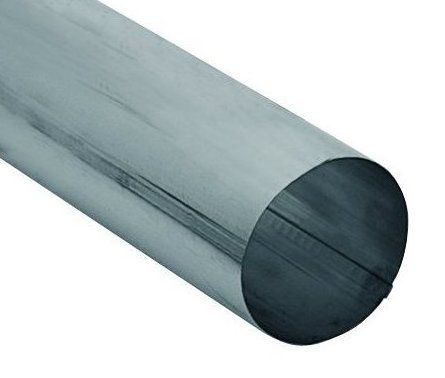
The primary downspout shapes in this category are rectangular and round. Round downspouts may have a plain, smooth surface or a corrugated profile.
The gutter profile and downspout shape do not have to match visually, but every connection must be dimensionally and hydraulically compatible.
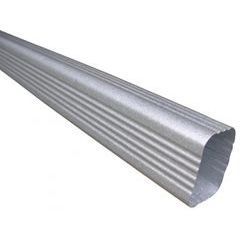
Rectangular Downspouts
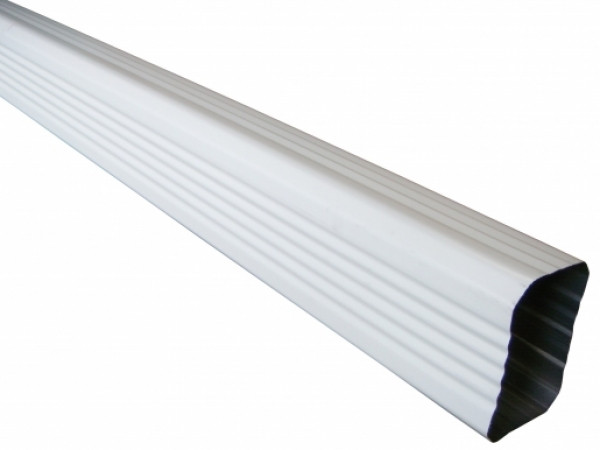
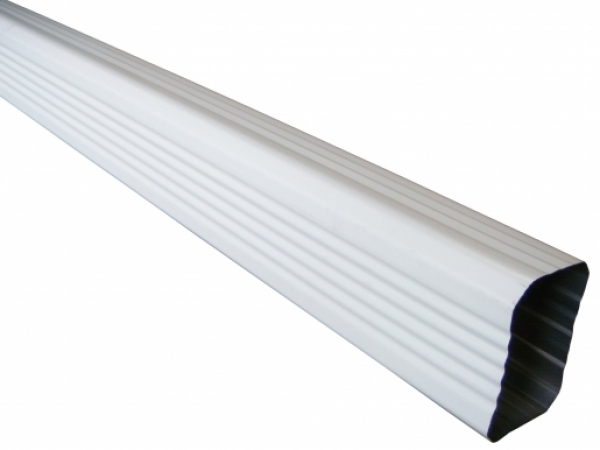
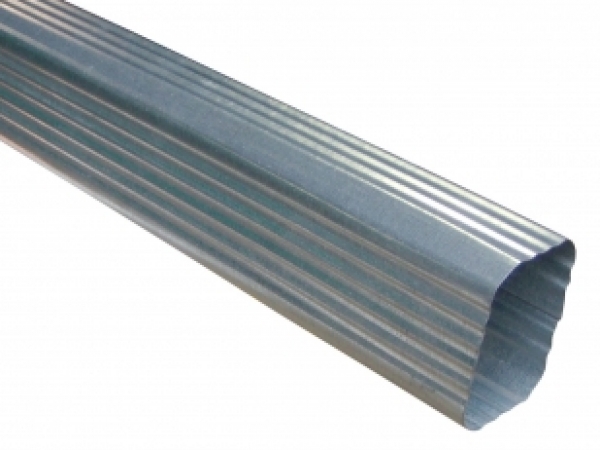
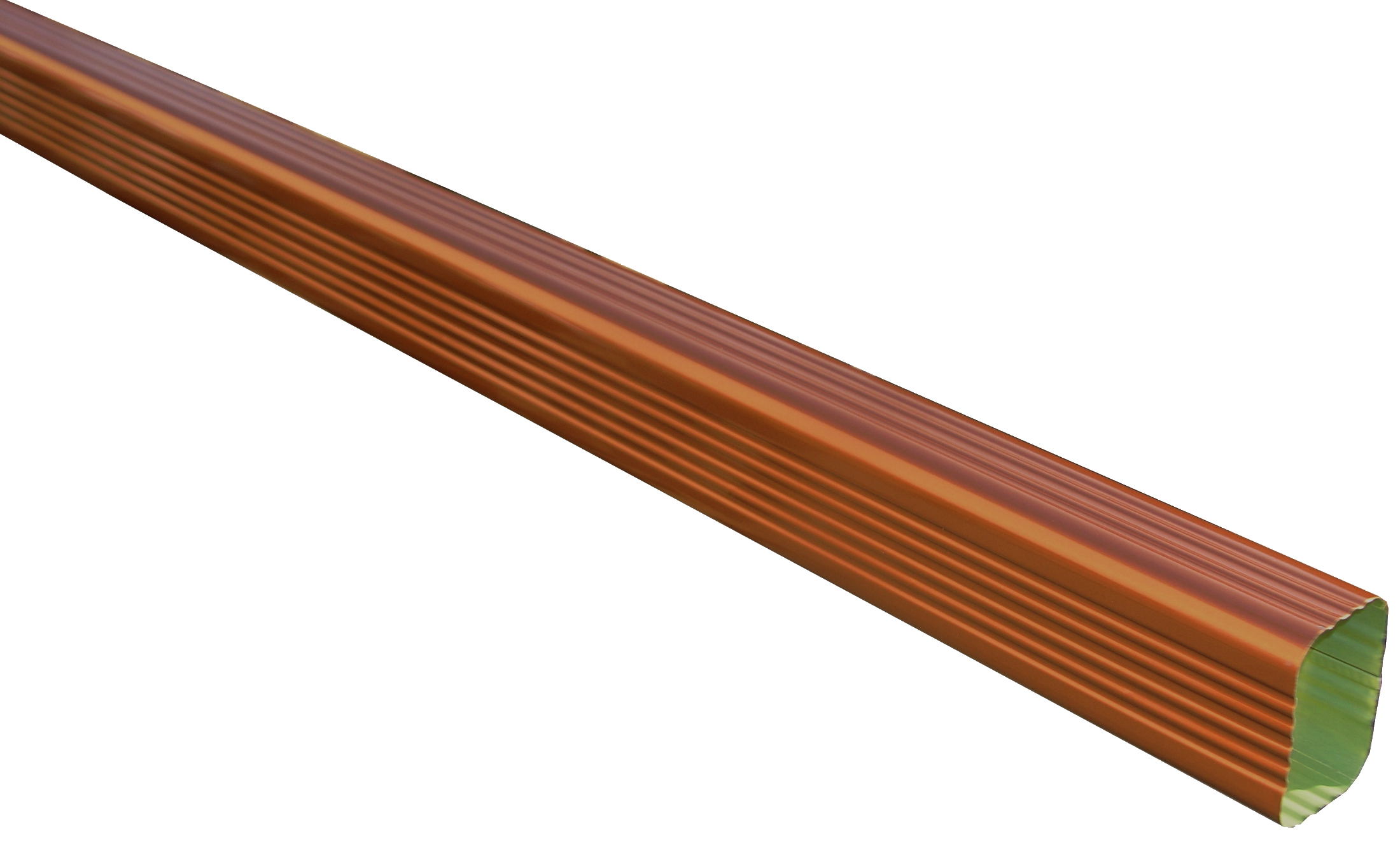
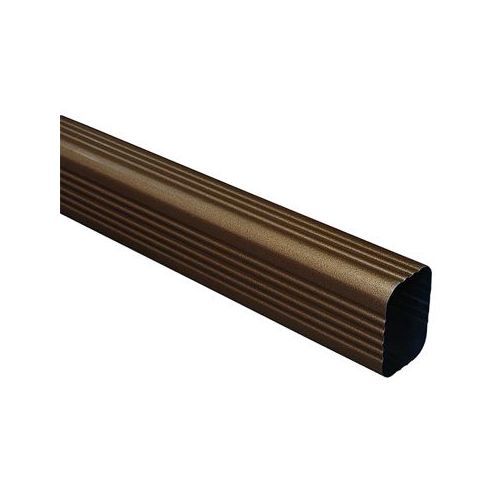
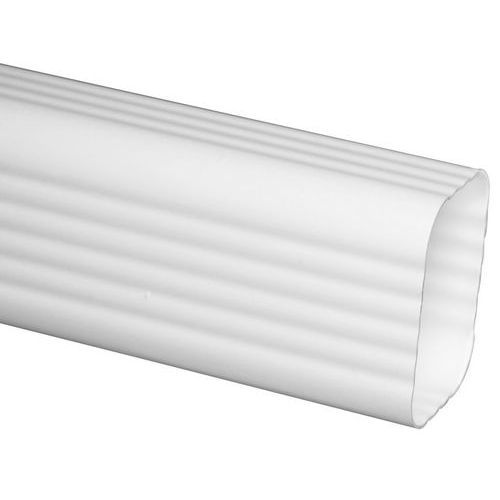
Rectangular downspouts have a width and depth rather than a diameter. They are commonly paired with K-style gutters and other gutter profiles with a more angular architectural appearance.
Rectangular downspouts are available in multiple dimensions, materials, colors, and finishes. Many rectangular metal downspouts have corrugations or formed ribs, but the exact surface profile varies by product.
A rectangular downspout system generally requires:
- An outlet made for the selected rectangular dimensions
- Rectangular elbows or offsets in the same size
- Compatible rectangular downspout brackets
- A matching tile adapter, extension, or discharge component
Rectangular dimensions are not interchangeable. A fitting for one width and depth should not be assumed to fit another rectangular downspout.
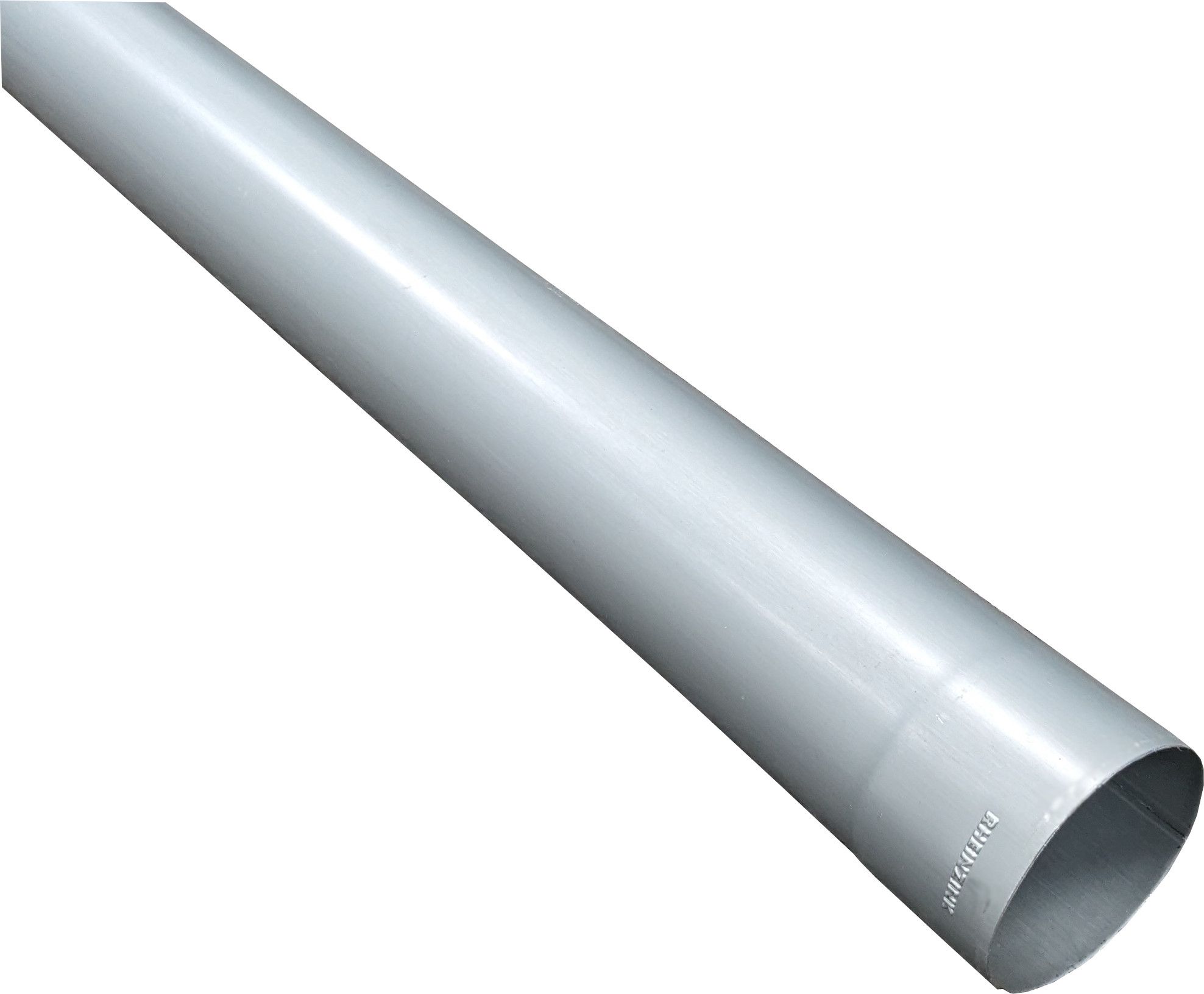
Plain Round Downspouts
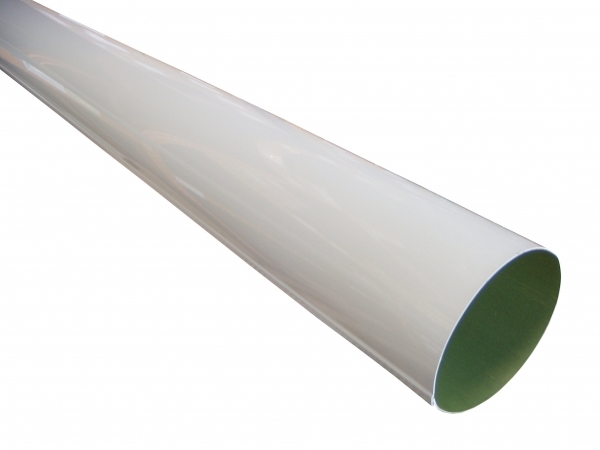
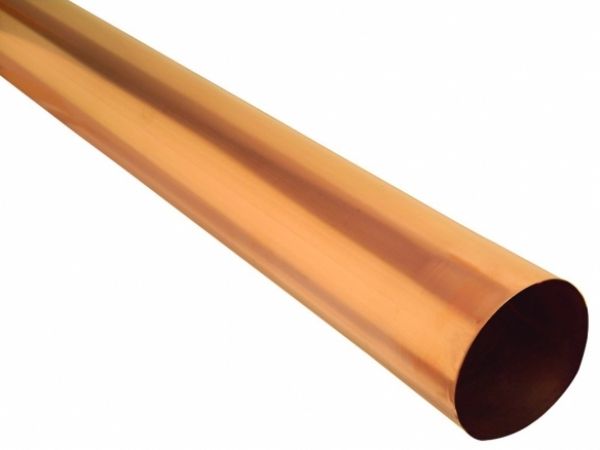
Plain round downspouts have a smooth cylindrical profile. They are commonly paired with half round gutters, traditional architectural gutter systems, and projects where a round downspout appearance is preferred.
Plain round downspouts can also be used with a compatible K-style gutter when the outlet, diameter, fittings, support components, and capacity are appropriate.
The catalog includes plain round downspouts in multiple diameters and materials. Diameter availability varies by material and product family.
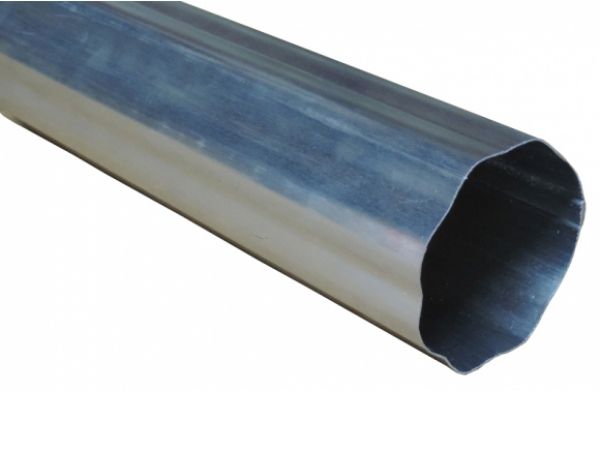
Round Corrugated Downspouts
Round corrugated downspouts have formed ribs or flutes running along the downspout. They provide a different architectural appearance from a plain round downspout and may have different elbows, offsets, and brackets.
A corrugated downspout should be paired with fittings specifically made for its diameter and profile. A plain round elbow or bracket should not automatically be assumed to fit a corrugated round downspout of the same nominal diameter.
Pairing Downspouts With Gutter Profiles
Rectangular downspouts are commonly used with K-style gutters, while plain round and round corrugated downspouts are commonly used with half round gutters. These are common system pairings rather than universal compatibility rules.
A round downspout may be used with a compatible K-style gutter, and a rectangular downspout may be used with a compatible half round gutter, provided the complete system is properly selected.
Before combining a gutter and downspout, confirm:
- Gutter profile and size
- Outlet shape and dimensions
- Downspout shape and size
- Required drainage capacity
- Elbow or offset compatibility
- Bracket compatibility
- Material and finish compatibility
- Final discharge connection
The gutter outlet creates the transition between the gutter and downspout. A downspout should not be selected without confirming that a suitable outlet is available.
Selecting Downspout Size and Quantity
Downspout size and quantity should be based on the drainage requirements of the building rather than a single residential rule of thumb.
Relevant factors include:
- Roof design area
- Local rainfall intensity
- Roof shape and pitch
- Length and configuration of each gutter section
- Number and placement of gutter outlets
- Number of downspouts
- Downspout shape and cross-sectional dimensions
- Gutter width-to-height relationship
- Number of elbows and offsets
- Underground or surface drainage restrictions
- Applicable plumbing codes and project requirements
The gutter, outlet, and downspout must be sized as one system. A large gutter can still overflow if it has too few outlets or insufficient downspout capacity.
A larger downspout may carry more water than a smaller downspout of the same general shape, but larger is not automatically better. The outlet, elbows, offsets, brackets, tile adapter, and downstream drainage connection must also fit the selected size.
Avoid relying on universal statements such as:
- One downspout for every fixed length of gutter
- One specific downspout size for every 5-inch gutter
- One specific downspout size for every 6-inch gutter
- A fixed amount of roof area for every nominal downspout size
Those relationships depend on the complete roof drainage design and local rainfall requirements.
Downspout Size Transitions
A downspout run should not be reduced in size without reviewing how the reduction will affect water flow.
Transitions may be required where:
- An outlet and downspout use different shapes
- A downspout connects to a conductor head
- An existing system is being repaired
- A tile adapter connects to another drainage-pipe size
- A rain barrel or diverter has a specific inlet
- Architectural conditions require a custom transition
Any transition should maintain the required drainage capacity and use a fitting intended for the connected products. A transition that physically joins two parts may still create an unacceptable restriction.
Downspout Materials and Finishes
The catalog includes downspouts in several material and finish families. Each has its own appearance, available shapes, sizes, fittings, connection methods, and installation considerations.
Painted Aluminum
Painted aluminum downspouts provide a lightweight option that does not rust like steel. They are available in rectangular, plain round, and round corrugated profiles, depending on the product.
Painted aluminum is offered in multiple factory-applied colors. Color availability varies by downspout shape, size, elbow, offset, bracket, outlet, and accessory.
Use the exact catalog color name when matching components. Similar color descriptions from different manufacturers or product families may not be identical.
Mill Finish Aluminum
Mill finish aluminum has a natural unfinished metallic surface rather than a factory-applied painted color.
Mill finish downspouts are available in select rectangular and round configurations. They should be paired with compatible mill finish elbows, brackets, outlets, tile adapters, fasteners, and accessories where a consistent appearance is required.
Mill finish aluminum should not automatically be described as ready for paint. Field painting may require cleaning, surface preparation, priming, and a coating system intended for aluminum.
Natural Copper
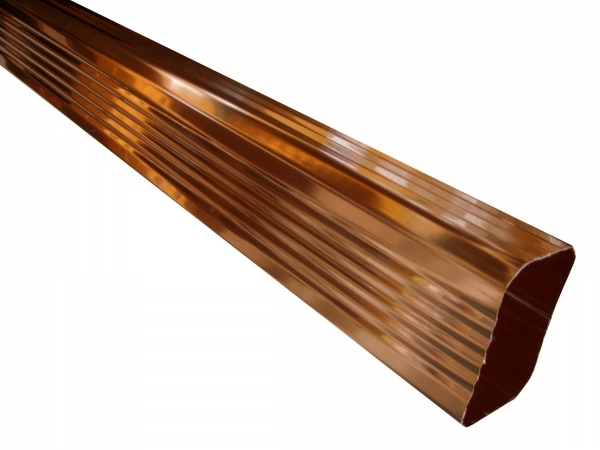
Natural copper downspouts have a bright reddish metallic appearance when new and change color as the copper weathers. The surface may progress through brown and darker tones before developing a blue-green or green patina.
Copper downspouts are available in rectangular, plain round, corrugated, and select decorative profiles. Shape, dimensions, copper weight, and available fittings vary by product.
Use compatible copper elbows, offsets, brackets, outlets, fasteners, cleanouts, tile adapters, and other components. Copper can accelerate corrosion of certain more active metals when moisture is present, so dissimilar-material contact and runoff direction must be considered.
Euro Copper
Euro copper is a separate European-style copper gutter and downspout system with its own dimensions, fittings, connection methods, and accessories.
Euro copper downspouts should be used with compatible Euro copper outlets, elbows, offsets, brackets, diverters, cleanouts, tile adapters, and related components.
Standard natural copper or U.S.-sized components should not be substituted based only on visual similarity.
Freedom Gray Copper
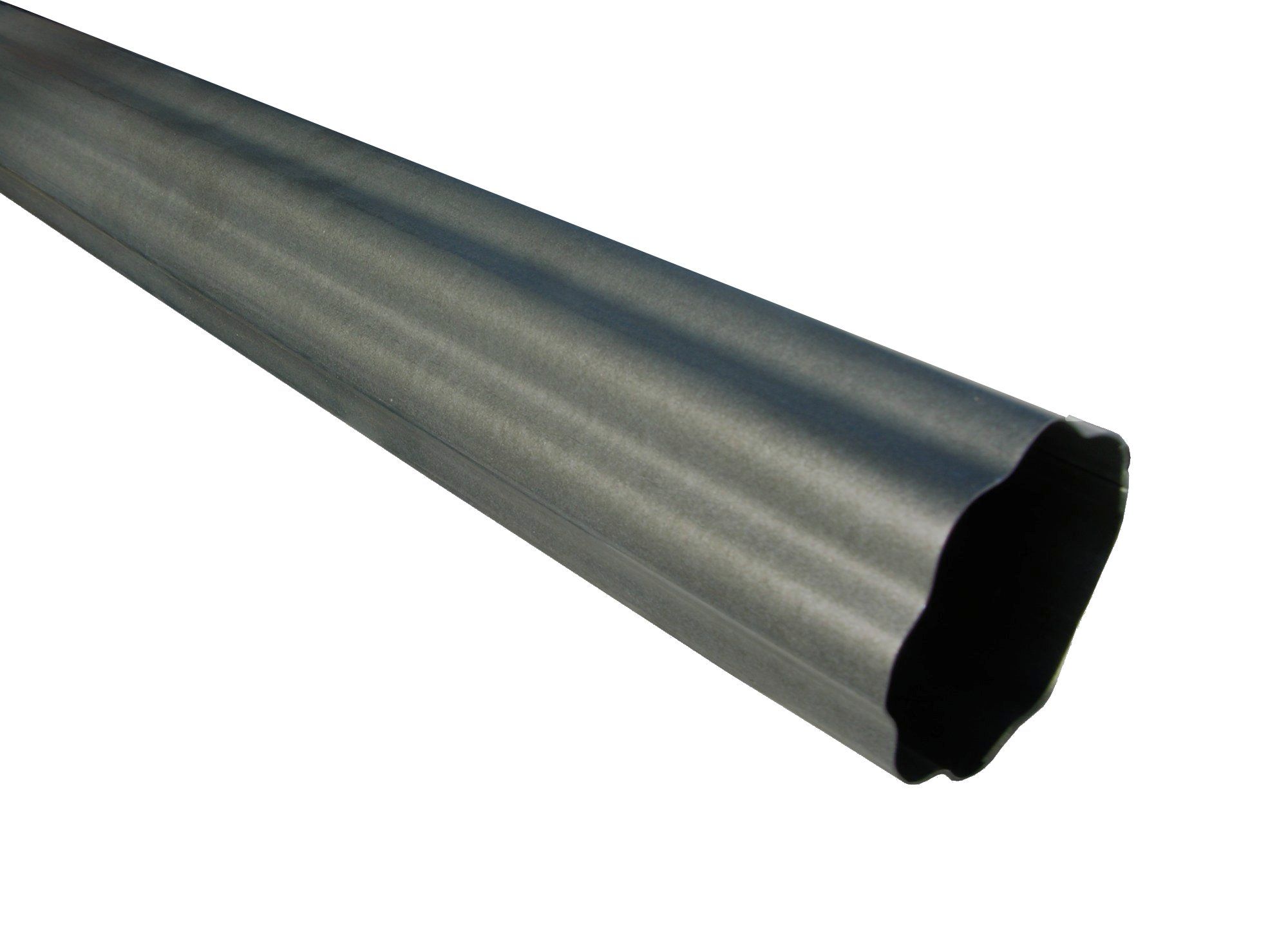
Freedom Gray downspouts use copper with a factory-applied tin-zinc coating that creates a gray exterior appearance.
Freedom Gray provides a copper substrate without the exposed reddish color or typical green patina of natural copper. Use compatible Freedom Gray elbows, brackets, outlets, fasteners, tile adapters, and accessories where available.
Compatibility with natural copper components should be confirmed individually rather than assumed across the entire system.
Galvanized Steel
Galvanized steel downspouts are made from steel with a zinc coating that helps protect the underlying metal.
The catalog includes galvanized steel downspouts and matching elbows, offsets, brackets, outlets, tile adapters, fasteners, and accessories.
Galvanized steel and Galvalume are different material systems. Galvanized steel uses a zinc coating, while Galvalume uses an aluminum-zinc coating.
Galvalume
Galvalume downspouts are made from steel with an aluminum-zinc coating. They have a neutral metallic appearance and are available with matching system components.
Use compatible Galvalume elbows, offsets, brackets, outlets, fasteners, tile adapters, and accessories where a consistent material system is required.
Galvalume should not be described as immune to scratching, coating damage, or corrosion. Cut edges, installation damage, incompatible materials, and exposure conditions can affect the system.
Paint Grip Steel
Paint Grip downspouts use phosphate-treated steel intended to accept paint. They are selected where a field-painted steel downspout system is required.
Use matching Paint Grip elbows, brackets, outlets, fasteners, tile adapters, and accessories. Follow the applicable surface preparation and paint requirements before finishing the material.
Paint Grip, galvanized steel, and Galvalume should be treated as separate finish families.
Preweathered Zinc
Preweathered zinc downspouts have a muted gray appearance and are part of an architectural zinc drainage system.
The catalog includes compatible preweathered zinc elbows, offsets, brackets, outlets, conductor heads, accessories, fasteners, and soldering products.
Zinc requires material-specific cutting, joining, fastening, and installation practices. Preweathered zinc is not the same material as galvanized steel.
Copper Penny Aluminum
Copper Penny downspouts are aluminum downspouts with a bright, glossy copper-colored finish.
They provide a copper-style appearance without using solid copper and will not develop the natural patina associated with unfinished copper.
Use matching Copper Penny elbows, offsets, brackets, outlets, fasteners, tile adapters, and accessories where a consistent finish is required.
Designer Copper Aluminum
Designer Copper downspouts are aluminum downspouts with a darker, marbled copper-style finish.
Designer Copper is a prefinished aluminum product rather than solid copper. It will not weather or develop patina in the same manner as natural copper.
Use matching Designer Copper components when maintaining a consistent appearance across the gutter and downspout system.
Vinyl
Vinyl downspouts are part of system-specific Traditional and Contemporary vinyl gutter systems.
Vinyl products use matching outlets, elbows, connectors, pipe clips, diverters, tile adapters, and discharge components. Traditional and Contemporary Vinyl parts should not be assumed to be interchangeable.
Confirm the system family, downspout dimensions, color, and compatible accessories before ordering.
Matching Materials and Finishes
A downspout does not always have to be the same material as the gutter, but mixed-material systems require additional review.
Before combining materials, consider:
- Direct contact between dissimilar metals
- Runoff from one metal onto another
- Fastener compatibility
- Differences in thermal expansion
- Finish and color matching
- Required joint method
- Availability of compatible fittings
- Exposure conditions
- Manufacturer or project requirements
Do not combine materials solely because their nominal dimensions appear to fit.
Material does not determine hydraulic capacity by itself. A steel downspout does not carry more water than an aluminum downspout with the same internal dimensions simply because steel is stronger.
Downspout Lengths and Ordering
Downspouts are generally ordered as defined sections or product units rather than custom continuous runs. Available section lengths vary by material, shape, size, and product family.
Before ordering, determine:
- Total vertical downspout length
- Length required across the roof overhang
- Number of straight sections
- Location of section connections
- Number and type of elbows
- Required offsets
- Bracket quantity and placement
- Lower discharge configuration
- Extra material needed for field cuts
- Whether the product is sold individually, by section, or in another unit
Do not assume every downspout category uses the same section length or quantity convention. Review the product options and unit of measurement before adding it to the cart.
Gutter Outlets
The gutter outlet creates the opening through which water enters the downspout.
Outlet selection depends on:
- Gutter profile and size
- Downspout shape
- Downspout dimensions
- Required capacity
- Gutter material
- Installation method
- Joint or sealing requirements
A rectangular outlet is not interchangeable with a round outlet. An outlet must also match the selected rectangular dimensions or round diameter.
Some outlets are installed through a field-cut opening, while other gutter systems use system-specific drop outlets, connectors, or fittings. Follow the requirements for the selected gutter and outlet.
Elbows and Offsets
Elbows and offsets route the downspout from the gutter outlet to the wall and around architectural obstacles.
They may be required to clear:
- Fascia
- Soffits and roof overhangs
- Cornices
- Ledges
- Trim
- Siding transitions
- Windows and doors
- Foundation projections
- Other building details
Rectangular elbow styles may change direction toward or away from the wall or turn the downspout left or right along the wall. Confirm the elbow style from the perspective of the installed downspout before ordering.
Round elbows can generally be rotated to establish the required direction, but the diameter, profile, and material must still match the downspout.
Offsets provide a defined lateral transition and can be useful where standard elbows and a short downspout section do not provide the required alignment.
Every elbow or offset adds resistance and changes the routing of the system. Complex downspout paths should be considered during sizing and drainage planning.
Downspout Brackets, Straps, and Pipe Clips
Downspout brackets secure the downspout to the building and help keep sections aligned and stable.
Available support products may include:
- Rectangular downspout brackets
- Round downspout brackets
- Pipe bands
- Pipe clips
- Decorative brackets
- Stand-off brackets
- System-specific vinyl clips
Bracket selection depends on:
- Downspout shape and size
- Material and finish
- Wall construction
- Required stand-off distance
- Section length
- Elbow and offset locations
- Wind and impact exposure
- Product instructions
- Applicable project requirements
There is no universal rule requiring exactly two brackets on a one-story building or three brackets on a two-story building. Support quantity and spacing should be based on the selected bracket, downspout, wall, and installation conditions.
Use fasteners appropriate for both the bracket and the wall construction. Fastening into wood siding, masonry, concrete, metal panels, and other exterior surfaces may require different hardware and attachment methods.
Downspout Connectors and Couplings
A connector or coupling joins two downspout sections or connects system-specific components.
Some metal downspouts are designed to nest by inserting a crimped or reduced upper section into the section below. Other products use separate couplings, connectors, gaskets, soldered joints, or system-specific fittings.
Connections should be oriented so water remains inside the drainage path. The required overlap, fastener, sealant, solder, or gasket depends on the selected product.
Do not assume that all rectangular or round downspouts connect using the same method.
Funnels, Diverters, and Conductor Heads
Funnels and conductor heads collect water from one or more gutter outlets, scuppers, or drainage paths before directing it into a downspout.
Diverters can redirect some or all of the water toward:
- A rain barrel
- A collection tank
- Another downspout branch
- A controlled discharge point
- A seasonal or adjustable drainage route
The inlet, outlet, and overflow capacity of the funnel or diverter must be compatible with the gutter and downspout system.
A rain-barrel diverter should include a plan for overflow when the barrel is full. It should not restrict the downspout or cause water to back up into the gutter.
Downspout Cleanouts and Guards
Cleanouts and access fittings provide a location for inspecting or removing debris from the downspout.
Downspout guards may help protect lower sections from:
- Lawn equipment
- Vehicles
- Foot traffic
- Animals
- Tampering
- Other impact exposure
The appropriate accessory depends on the downspout shape, dimensions, material, installation height, and expected exposure.
A cleanout or guard does not eliminate the need to inspect the gutter outlet, elbows, underground connection, and complete drainage path.
Tile Adapters
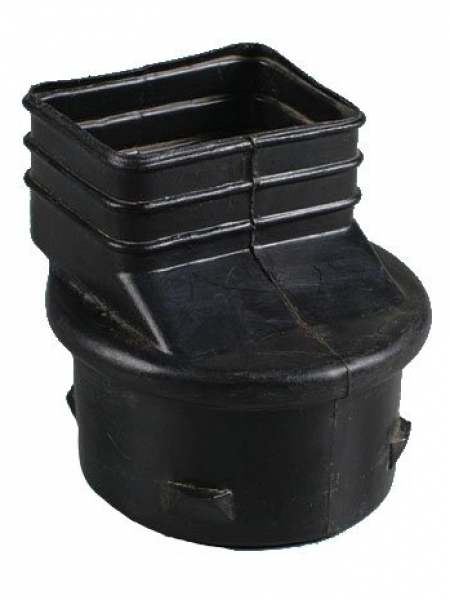
A tile adapter connects the lower end of a downspout to a compatible ground-level or underground drainage pipe.
The adapter must match both:
- The downspout shape and dimensions
- The drainage-pipe type and size
The catalog separates tile adapters according to the intended drain-tile connection.
- Black tile adapters: Commonly used with flexible black plastic drain tile, sometimes referred to as elephant trunk.
- White tile adapters: Used with compatible solid white or green drainage pipe, including select SDR 26 and SDR 35 applications.
Color alone is not enough to determine compatibility. Confirm the downspout dimensions, pipe type, pipe size, and fitting configuration.
Do not assume that every underground drainage pipe is perforated. The correct pipe type depends on the drainage design and applicable local requirements.
Surface Discharge and Underground Drainage
A downspout may discharge at the surface or connect to an underground drainage system.
Surface-discharge components may include:
- Lower elbow
- Downspout extension
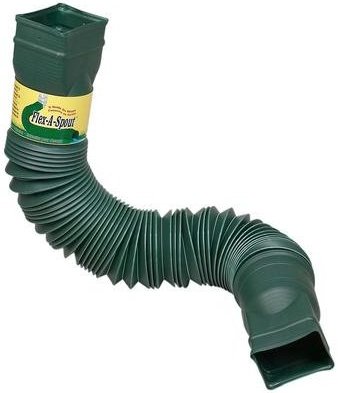
- Flexible extension
- Splash block
- Diverter
- Rainwater collection connection
Underground connections may include:
- Tile adapter
- Solid drainage pipe
- Catch basin
- Stormwater system
- Dry well
- Other designed drainage components
The discharge method should move water to an appropriate location without creating erosion, standing water, icing, or drainage problems for the building or neighboring property.
Before connecting to an existing underground pipe, confirm where the pipe leads, whether it is open and functional, and whether it has sufficient capacity.
Downspouts and Rain Chains
Rain chains provide a visible path for water to travel from the gutter toward a bowl, basin, drain, barrel, or ground-level collection point.
They should not automatically be treated as a direct replacement for a closed downspout. Performance depends on:
- Rainfall intensity
- Roof drainage area
- Outlet and chain design
- Number of chains
- Wind exposure
- Splash control
- Collection basin
- Final discharge location
- Ice conditions
Use a rain chain only where the complete drainage and splash-control arrangement is appropriate for the project.
Installation Planning
There is no single downspout installation procedure that applies to every product in this category.
Installation methods vary according to:
- Rectangular or round shape
- Plain or corrugated profile
- Material and finish
- Downspout dimensions
- Gutter and outlet type
- Elbow and offset arrangement
- Wall construction
- Bracket style
- Joint method
- Surface or underground discharge
- Building height
- Applicable codes and project specifications
Before installation, confirm:
- Required drainage capacity
- Number and location of outlets
- Downspout shape and size
- Upper elbow or offset layout
- Straight-section lengths
- Bracket type and spacing
- Fastener compatibility
- Section-connection method
- Lower elbow or adapter
- Final discharge location
- Dissimilar-material concerns
- Access for cleaning and maintenance
Copper, zinc, steel, aluminum, vinyl, and system-specific European products may require different cutting tools, fasteners, soldering methods, sealants, connectors, and installation experience.
Downspout Maintenance
Downspouts should be inspected periodically to confirm that water can move through the complete drainage path.
Inspect for:
- Debris at the gutter outlet
- Clogged elbows or offsets
- Blocked downspout sections
- Loose or separated joints
- Missing or damaged fasteners
- Loose brackets or pipe clips
- Dented, cracked, or damaged sections
- Coating damage or corrosion
- Debris in cleanouts
- Blocked tile adapters
- Restricted underground drainage
- Erosion or standing water at the discharge
- Water leaking near the wall or foundation
A downspout can appear clear at the bottom while remaining restricted near an upper elbow or outlet. Inspect the complete system rather than checking only the discharge point.
Frequently Asked Questions
What is a gutter downspout?
A gutter downspout is the pipe that carries rainwater from the gutter outlet down the side of the building and toward the intended drainage or discharge location.
What is the difference between rectangular and round downspouts?
Rectangular downspouts are measured by width and depth and are commonly paired with K-style gutters. Round downspouts are measured by diameter and are commonly paired with half round gutters. Either shape may be used with another gutter profile when the outlet, fittings, capacity, and mounting components are compatible.
What is the difference between plain round and round corrugated downspouts?
Plain round downspouts have a smooth cylindrical surface. Round corrugated downspouts have formed ribs or flutes and require fittings compatible with that profile and diameter.
Can I use a round downspout with a K-style gutter?
Yes, when a compatible round outlet and correctly sized round components are available. The gutter profile does not require one downspout shape, but the complete system must be compatible.
Can I use a rectangular downspout with a half round gutter?
Yes, in a properly designed system with a compatible rectangular outlet, fittings, brackets, and sufficient drainage capacity.
How do I choose a downspout size?
Downspout sizing should account for roof design area, local rainfall intensity, gutter-section length, gutter dimensions, outlet placement, number of downspouts, and the complete discharge path.
Are larger downspouts always better?
No. A larger downspout may provide additional capacity, but it must match the outlet, elbows, offsets, brackets, tile adapter, and downstream drainage system. The correct size should be based on the complete drainage design.
How many downspouts do I need?
The required number depends on roof design area, rainfall intensity, gutter length and configuration, outlet placement, downspout size, and applicable project requirements. One fixed spacing rule does not apply to every building.
Does the downspout material affect water capacity?
Material alone does not determine capacity. Downspout shape, internal dimensions, number of downspouts, fittings, and drainage layout control how much water the system can carry.
Are all downspout components interchangeable?
No. Outlets, elbows, offsets, brackets, connectors, and tile adapters must match the downspout shape, size, material, finish, and product system.
What is a tile adapter?
A tile adapter connects a downspout to a compatible drainage pipe. The adapter must match both the downspout dimensions and the type and size of the connected pipe.
Do downspouts have to drain underground?
No. A downspout may discharge through a lower elbow, extension, splash block, rainwater collection system, or a properly designed underground drainage connection.
Can a rain chain replace a downspout?
A rain chain may be used in select applications, but it should not automatically be treated as an equal-capacity replacement. Rainfall, roof area, splash, wind, collection, and discharge must be considered.
What should I verify before ordering?
Confirm the downspout shape, dimensions, profile, material, finish, section length, outlet, elbows or offsets, brackets, connection method, tile adapter or discharge component, and required drainage capacity.