

Buying Guide & Product Information
Gutter Buying Guide: Profiles, Materials, Sizing, and Compatibility
Rain gutters collect runoff from the roof and direct it toward outlets, downspouts, and the intended drainage or discharge location. A properly planned gutter system can help manage water around roof edges, siding, foundations, entrances, landscaping, and other areas surrounding a building.
Selecting a gutter involves more than choosing a color or material. The gutter profile, size, material, supplied length, hanger system, outlet placement, downspout capacity, joint method, and compatible accessories must work together as a complete drainage system.
This category includes K-style and half-round gutters in multiple sizes, materials, colors, finishes, profiles, and lengths. Product availability varies, so review the individual product specifications before ordering.
Choosing a Gutter Profile
The gutter profile determines the shape and appearance of the gutter and affects which hangers, end caps, miters, outlets, guards, and other components are compatible.
K-Style Gutters
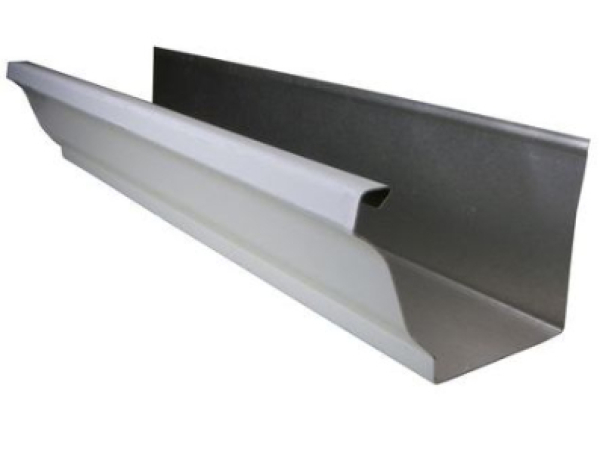
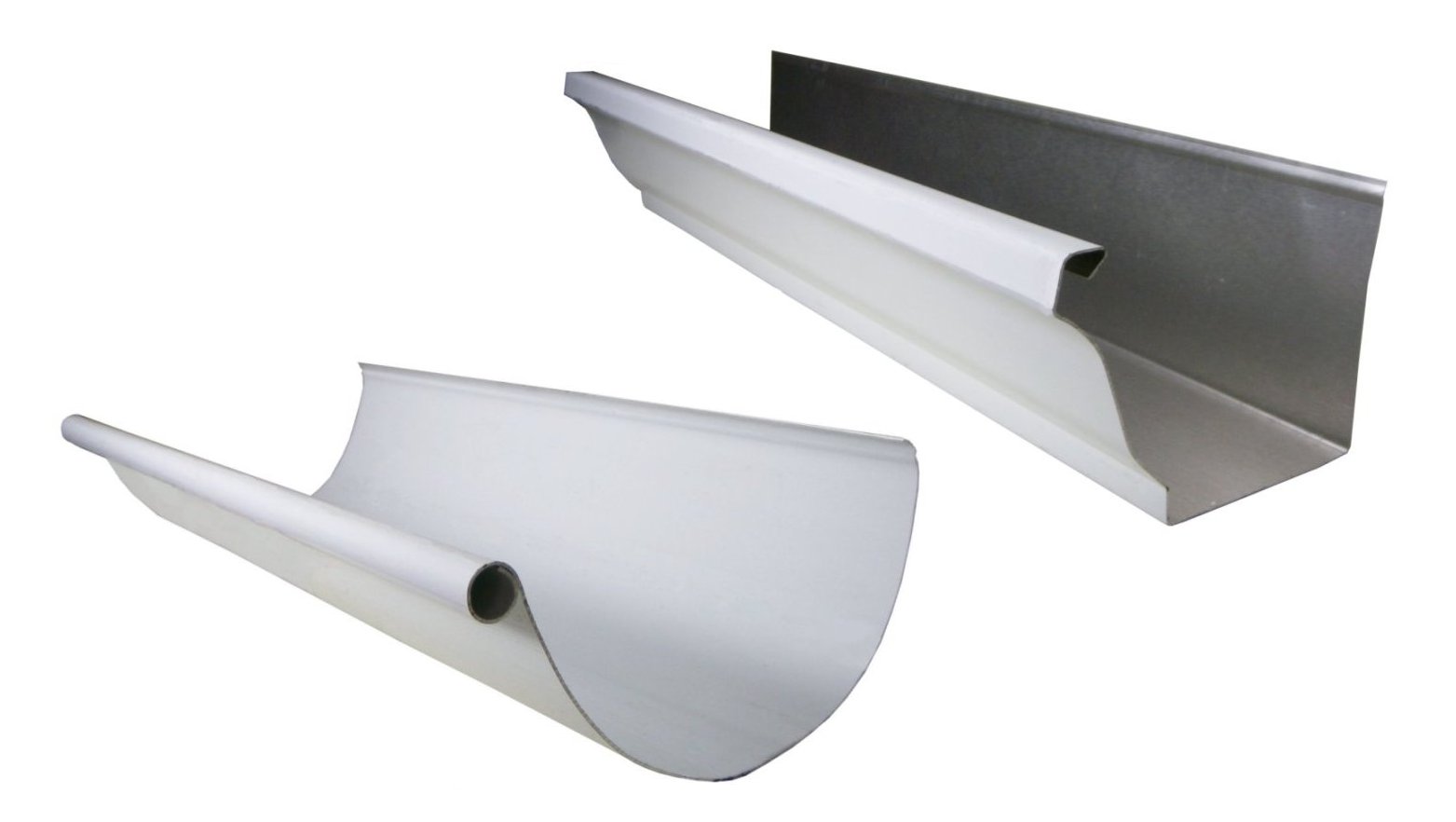
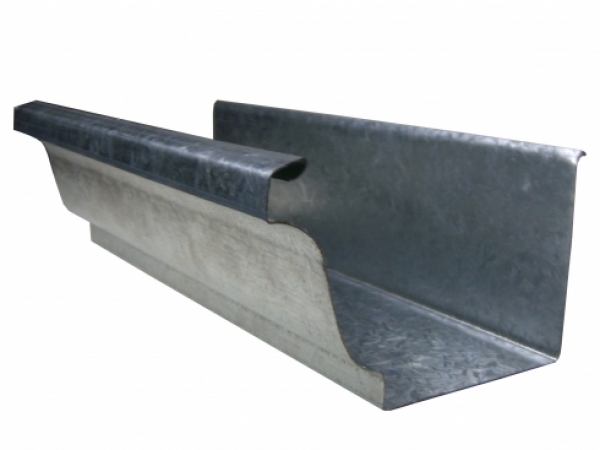
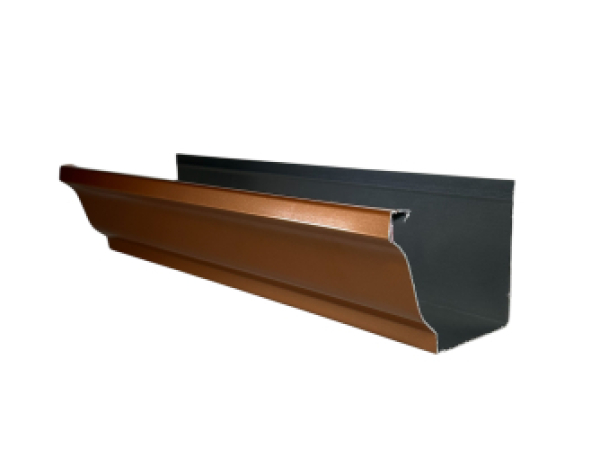
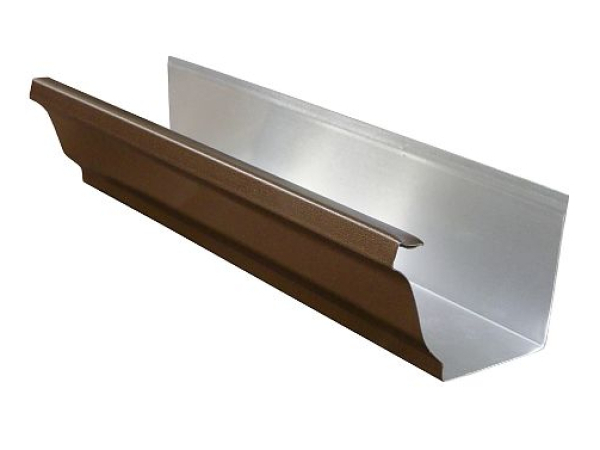
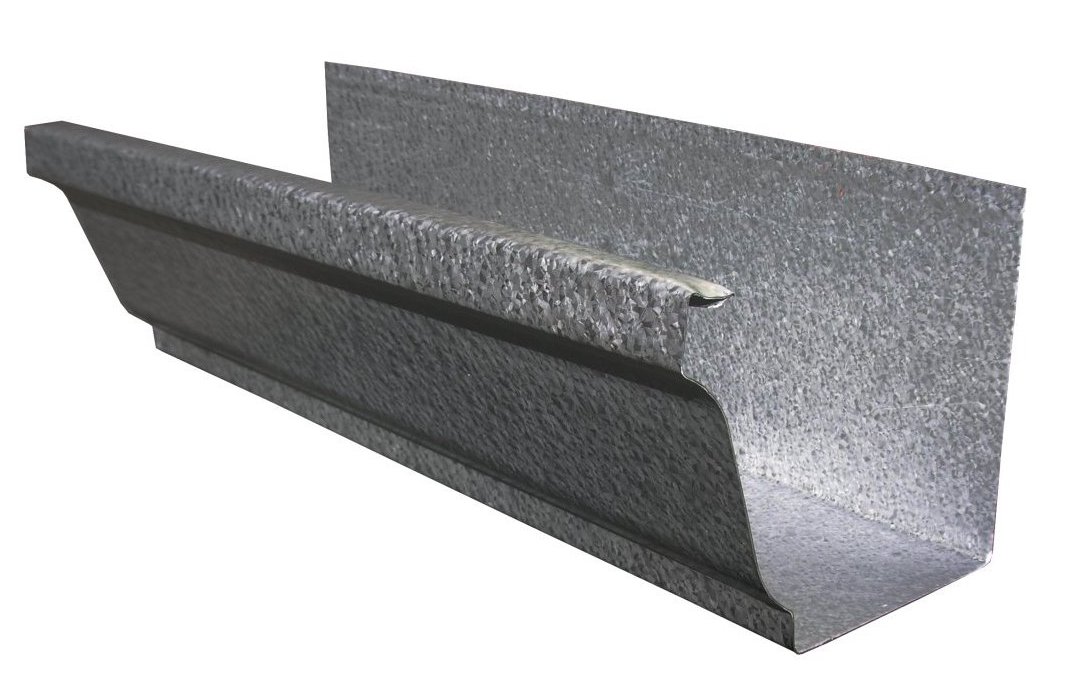
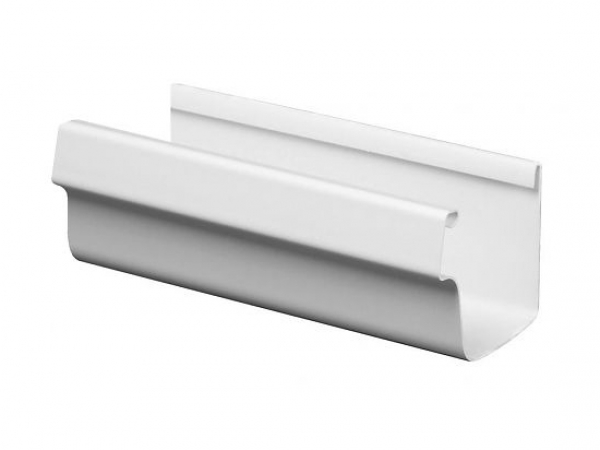
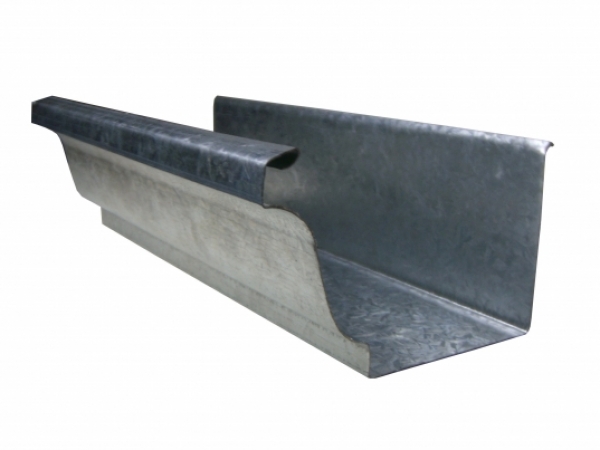
K-style gutters have a flat back, a generally flat bottom, and a decorative outer face commonly compared to crown molding. Their flat back allows them to be mounted against fascia using compatible hidden, internal, or external hangers.
K-style gutters are available in several sizes and materials throughout the catalog. Depending on the product, they may be supplied in standard sections or cut to a specified length.
K-style describes the gutter profile and does not mean that the completed system will be seamless. Longer gutter sections can reduce the number of joints, but seams may still be required where sections connect or where the gutter changes direction.
Half-Round Gutters
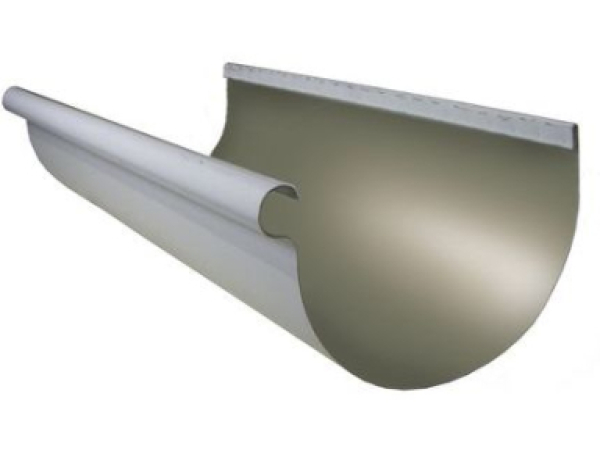
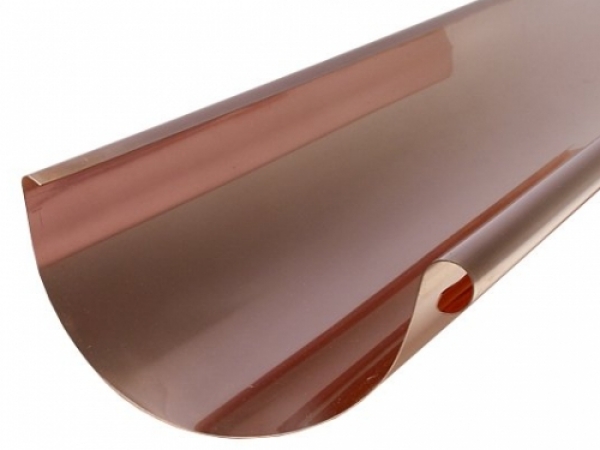
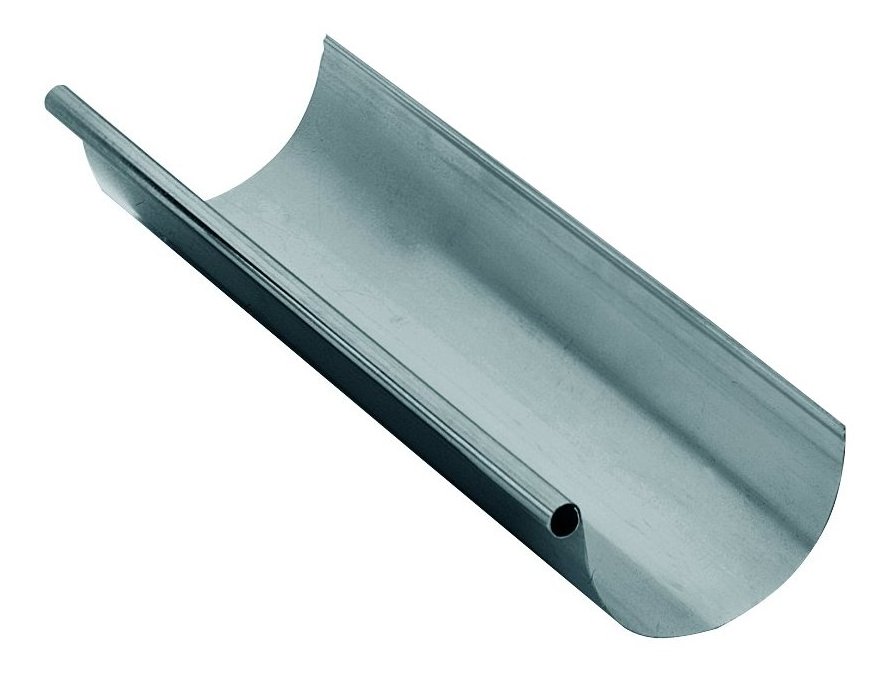
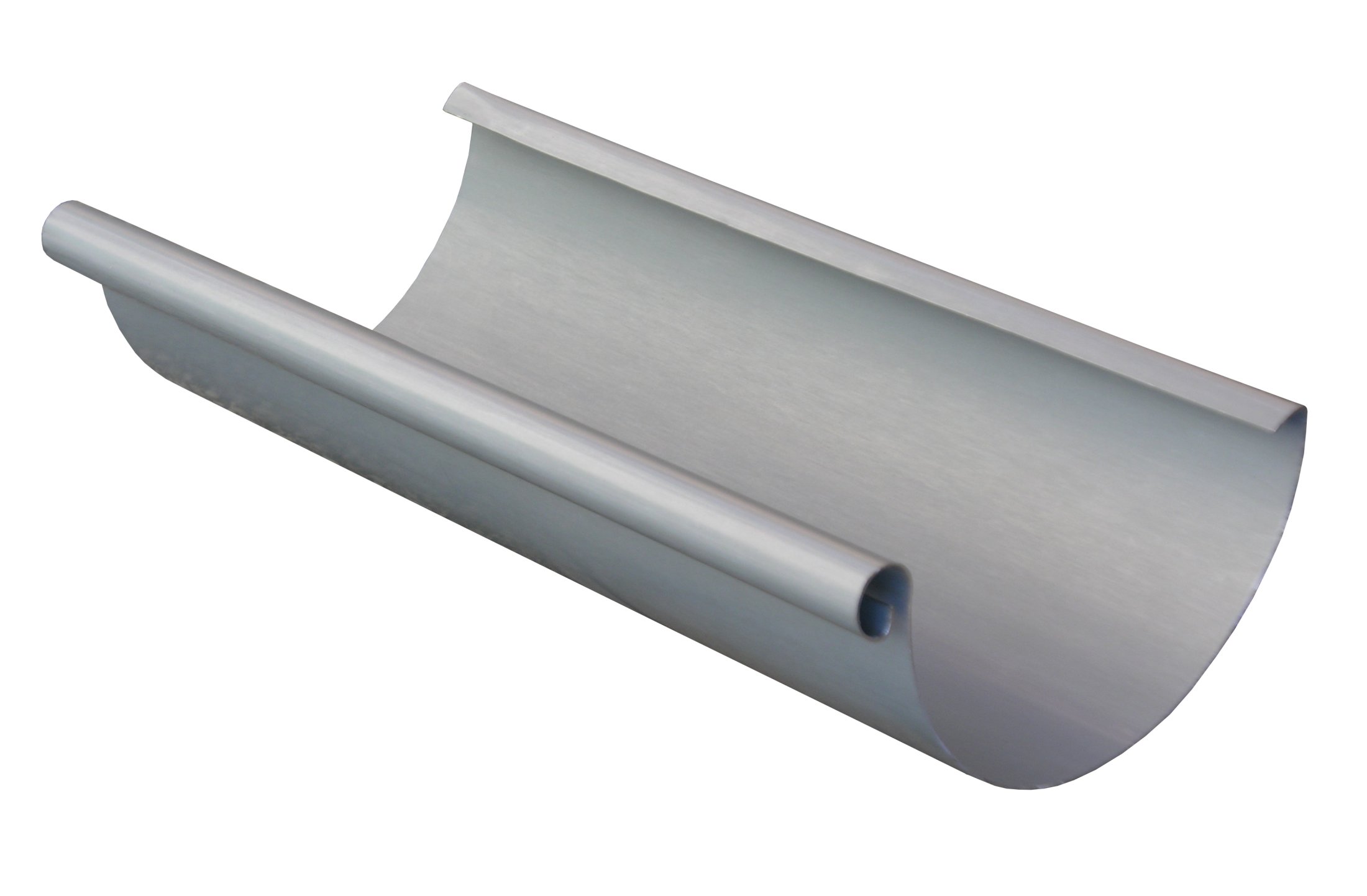
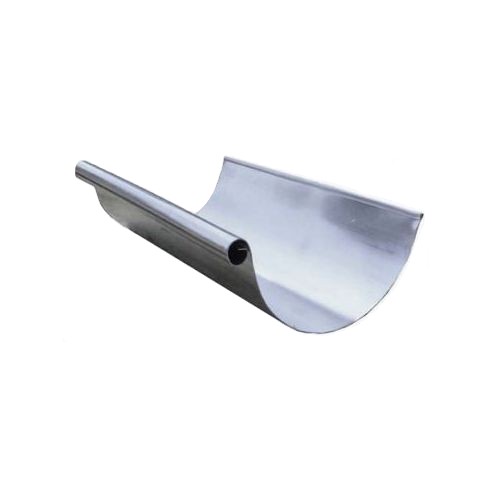
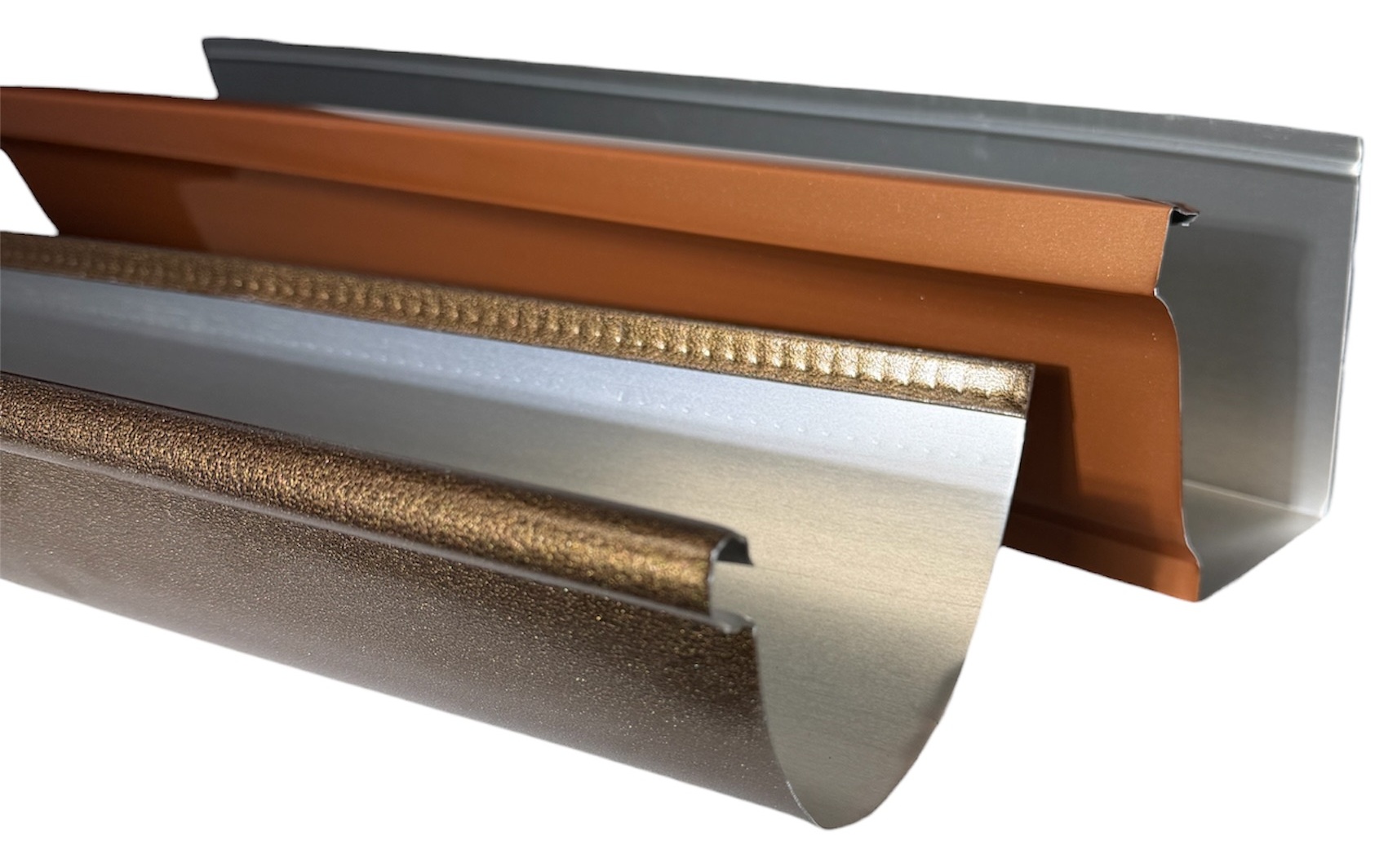
Half-round gutters have a rounded, semicircular trough. They are commonly selected for historic homes, custom residences, architectural projects, and buildings where a traditional or decorative roof-edge appearance is desired.
Available half-round configurations include traditional-bead, reverse-bead, double-bead, and high-back profiles. The bead direction and back configuration can affect hanger selection and compatibility with end caps, miters, outlets, and gutter guards.
Half-round gutters offer a wider range of visible and concealed mounting methods than a single universal hanger system. Depending on the project, the gutter may be installed using circle hangers, hidden hangers, fascia-mounted hangers, roof-mounted assemblies, shanks, wedges, or other compatible supports.
Gutter Profile and Component Compatibility
K-style and half-round components are not generally interchangeable. Even within one profile, compatibility may depend on the exact size, bead direction, material, thickness, or product system.
Before ordering, confirm:
- Gutter profile and size
- Half-round bead or back configuration
- Gutter material and finish
- Supplied or custom-cut length
- Material thickness, gauge, or copper weight where applicable
- Hanger style and mounting surface
- End-cap profile and direction where applicable
- Miter type and corner angle
- Outlet shape and dimensions
- Downspout shape and size
- Gutter-guard compatibility
- Required fasteners, sealants, solder, connectors, or joining materials
A component described as K-style or half-round may still fit only certain sizes or material families. Review the specifications for each part rather than relying on the category name alone.
Selecting the Correct Gutter Size
Gutter size should be based on the drainage requirements of the building rather than appearance or building type alone.
Relevant sizing factors include:
- Roof design area
- Local rainfall intensity
- Roof shape and pitch
- Length of each gutter section
- Gutter profile and dimensions
- Number and placement of outlets
- Number, size, and placement of downspouts
- Inside and outside corner configuration
- Applicable building codes and project specifications
The gutter, outlets, and downspouts must be planned as one drainage path. A larger gutter will not provide its intended capacity if the system has too few outlets, undersized downspouts, or restricted discharge connections.
Trees and surrounding vegetation can increase debris exposure and maintenance requirements, but they do not determine the hydraulic capacity of the gutter.
Gutter Materials and Finishes
The catalog includes several gutter materials and finish families. Each option has its own appearance, weight, fabrication requirements, available profiles, compatible components, and installation considerations.
Painted Aluminum Gutters
Painted aluminum gutters provide a lightweight option that does not rust and is available in a broad selection of factory-applied colors. The catalog includes painted aluminum K-style, traditional single-bead half-round, and reverse-bead half-round gutters.
Color and size availability varies by product. Confirm that matching downspouts, elbows, miters, end caps, hangers, outlets, brackets, and accessories are available in the required color and dimensions.
Although aluminum does not rust like steel, it should still be installed with compatible fasteners and surrounding materials.
Mill Finish Aluminum Gutters
Mill finish aluminum has an unfinished metallic surface rather than a factory-applied painted color. It is used where a natural aluminum appearance is desired or where the project calls for a separate finishing process.
Mill finish is a distinct product finish and should not be treated as identical to painted aluminum. Verify the finish across the gutter and all visible system components.
Natural Copper Gutters
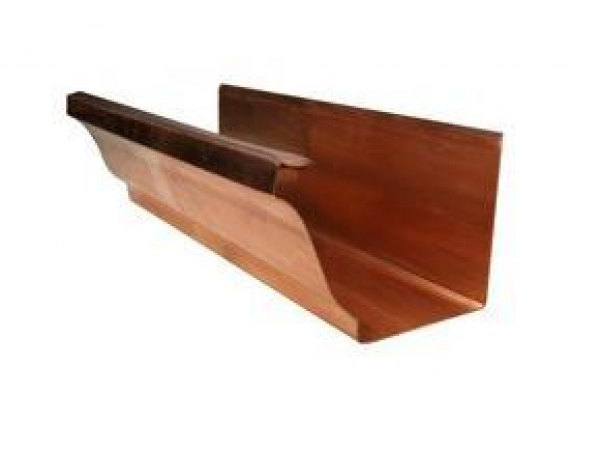
Natural copper gutters have a distinctive metallic appearance that changes as the copper weathers and develops a patina. Copper gutters are available in multiple profiles, sizes, thicknesses or weights, and supplied-length options.
Copper systems may require soldering or other material-specific joining methods. Confirm the gutter profile and copper weight before choosing hangers, miters, end caps, outlets, downspouts, elbows, brackets, fasteners, and installation materials.
Euro Copper Gutters
Euro copper gutters are part of a separate European-style half-round system. They are designed for use with matching Euro copper downspouts, elbows, miters, end caps, hangers, outlets, brackets, and accessories.
The Euro copper system uses its own sizing and connection methods and should not be treated as automatically interchangeable with standard copper gutter components. Verify the stated dimensions and use compatible Euro copper parts throughout the system.
Freedom Gray Copper Gutters
Freedom Gray gutters use copper with a factory-applied tin-zinc coating that creates a gray exterior appearance. The finish is intended for projects that require the performance characteristics of copper without the typical exposed natural-copper color or green patina.
The catalog includes matching Freedom Gray downspouts, elbows, miters, end caps, hangers, outlets, brackets, and fasteners. Compatibility with natural copper components should be confirmed for the specific application rather than assumed.
Galvanized Steel Gutters
Galvanized steel gutters are made from steel with a zinc coating that helps reduce corrosion of the underlying metal. They provide the weight and structural characteristics of steel and are available in select K-style and half-round profiles and lengths.
If galvanized steel will be painted, the surface may need to weather or be prepared according to the selected paint system. Galvanized steel and Paint Grip steel are separate finishes and should not be treated as the same product.
Paint Grip Steel Gutters
Paint Grip gutters are made from phosphate-treated steel intended to accept paint. They are available in select K-style and half-round profiles for projects requiring a field-painted steel gutter system.
The catalog includes matching Paint Grip downspouts, elbows, miters, end caps, hangers, outlets, brackets, fasteners, and accessories. Follow the applicable coating and paint instructions before finishing the system.
Galvalume Gutters
Galvalume gutters are made from steel with an aluminum-zinc coating. They provide the structural characteristics of steel with a factory-applied metallic coating and a neutral unfinished appearance.
The Galvalume product family includes compatible downspouts, elbows, miters, end caps, hangers, outlets, brackets, wedges, flashing, fasteners, and accessories. Confirm the gutter profile and size before selecting the remaining components.
Preweathered Zinc Gutters
Preweathered zinc gutters are made from architectural zinc with a gray, preweathered appearance. Zinc develops a protective surface as it weathers and requires material-specific fabrication, joining, fastening, and installation practices.
The catalog includes matching preweathered zinc downspouts, elbows, offsets, miters, end caps, hangers, outlets, brackets, and accessories. Use components and installation materials intended for zinc.
Preweathered zinc is not the same material as galvanized steel. Galvanized steel consists of steel protected by a zinc coating, while the zinc gutter category represents an architectural zinc system.
Copper Penny Aluminum Gutters
Copper Penny gutters are aluminum gutters with a bright, glossy copper-colored finish. They provide a copper-style appearance without using solid copper and will not develop the natural patina associated with unfinished copper.
Use compatible Copper Penny downspouts, elbows, offsets, miters, end caps, hangers, outlets, brackets, fasteners, flashing, and accessories where a consistent finish is required.
Designer Copper Aluminum Gutters
Designer Copper gutters are aluminum gutters with a darker, marbled copper-style finish. The finish has greater color and texture variation than the brighter Copper Penny option.
Designer Copper is a prefinished aluminum product, not solid copper. It should be paired with compatible Designer Copper system components when a consistent appearance is required.
Faux Copper Gutters
Faux copper gutters are prefinished aluminum products designed to resemble copper. The catalog’s faux copper selection includes Copper Penny and Designer Copper.
Copper Penny has a brighter, glossier appearance, while Designer Copper has a darker, more varied finish. Neither finish will weather or develop a natural patina in the same way as solid copper.
Vinyl Gutters
Vinyl gutters are lightweight, corrosion-resistant systems that use system-specific connectors, expansion joints, hangers, outlets, downspouts, elbows, miters, and end caps.
The catalog includes traditional and contemporary vinyl gutter systems in select sizes and colors. Vinyl components from different systems are not necessarily interchangeable, even when their nominal sizes appear similar. Use the matching components identified for the selected vinyl gutter line.
Comparing Gutter Materials
No single gutter material is the correct choice for every project. Consider the complete system and installation requirements rather than selecting a material based on one characteristic.
Factors to compare include:
- Desired gutter profile
- Available sizes and lengths
- Color or natural-metal appearance
- Building style
- Material weight
- Required joining method
- Hanger and fastener requirements
- Availability of matching components
- Field-painting requirements
- Expansion and contraction considerations
- Exposure conditions
- Installation experience and tools
- Project budget
- Freight and packaging requirements
- Maintenance expectations
Material alone does not determine how much rainwater a gutter can carry. Drainage capacity depends primarily on the gutter’s dimensions, profile, outlets, downspouts, and overall system design.
Gutter Lengths and Ordering
Gutters may be sold as defined sections or priced according to length. Many metal gutters can be supplied or cut in lengths up to 20 feet, but available lengths vary by material, profile, product, and shipping method.
Before ordering, determine:
- The measured length of every straight gutter run
- The available supplied or custom length for the selected product
- Where joints will be located
- The number and type of inside and outside corners
- The position of each outlet and downspout
- The required shipping or freight packaging
- Whether the product is sold per foot, per section, or as another unit
- Whether the entered quantity represents pieces or total linear footage
Do not assume that every gutter in the category follows the same ordering method. Review the unit of measurement, available length options, and product instructions before adding the gutter to the cart.
Components of a Complete Gutter System
A typical gutter installation may include:
- Gutters
- Gutter hangers or brackets
- Shanks or wedges where required
- End caps
- Inside and outside miters
- Gutter outlets
- Downspouts
- Downspout elbows
- Downspout offsets
- Downspout brackets
- Gutter flashing
- Fasteners
- Sealant, solder, connectors, or joining materials
- Gutter guards
- Wire strainers
- Conductor or leader heads
- Rain chains
- Tile adapters
- Splash blocks or other discharge components
Not every project requires every item. The necessary parts depend on the selected gutter system, roofline, mounting surface, number of corners, downspout path, joining method, and final drainage plan.
Rain chains and conductor heads are optional architectural or drainage components rather than direct replacements for every standard downspout arrangement. Confirm that the selected drainage method can handle the project requirements.
Installation Planning
Installation methods vary substantially across the products in this category. There is no single hanger spacing, fastener, joint method, or installation sequence that applies to every gutter profile and material.
Before installation, confirm:
- Applicable building codes and project specifications
- Required drainage capacity
- Gutter pitch and outlet locations
- Hanger type and spacing
- Fascia, roof-deck, crown-molding, or rafter mounting conditions
- Appropriate fasteners for the gutter material
- Joint and expansion requirements
- Required sealant, solder, or connectors
- Compatibility between dissimilar materials
- Downspout attachment and discharge location
- Snow, ice, wind, and other local loading conditions
Use the instructions provided for the selected gutter system and installation products. Complex rooflines, architectural metals, long gutter runs, elevated work, and projects with unusual drainage requirements may require an experienced gutter contractor, sheet-metal professional, roofer, designer, or engineer.
Gutter Guards and Maintenance
Gutter guards can help reduce the amount of leaves and other debris entering the gutter. Available designs include screens, covers, hoods, filters, hybrid guards, wire strainers, and products made for specific gutter profiles and materials.
A gutter guard must match the gutter profile, size, roof-edge condition, and installation method. A guard designed for a K-style gutter may not fit a half-round gutter, and some guards are limited to particular sizes or materials.
Gutter guards do not eliminate maintenance. Periodically inspect the complete system for:
- Debris in the gutter or on the guard
- Restricted outlets and downspouts
- Loose or damaged hangers
- Open or leaking joints
- Incorrect pitch or standing water
- Overflow marks
- Damaged end caps or miters
- Coating or material damage
- Disconnected drainage components
- Water discharging too close to the building
Frequently Asked Questions
What are the primary gutter profiles in this category?
The two primary profiles are K-style and half-round. K-style gutters have a flat back and decorative outer face. Half-round gutters have a rounded trough and are available in several bead and back configurations.
Does K-style or half-round mean the gutter is seamless?
No. Those terms describe the gutter profile. Longer or custom-cut sections can reduce the number of seams, but joints may still be required based on the roofline, supplied lengths, corners, and installation plan.
Which gutter material is best?
There is no single best material for every project. The appropriate choice depends on the required profile, appearance, available sizes, joining method, compatible components, installation conditions, budget, and maintenance expectations.
Does steel carry more water than aluminum?
Not automatically. Material affects characteristics such as weight, fabrication, appearance, and corrosion protection. Water capacity depends on the gutter profile and dimensions, along with the number and size of outlets and downspouts.
What is the difference between solid copper and faux copper gutters?
Solid copper is an architectural metal that changes appearance and develops a patina as it weathers. Faux copper gutters are aluminum gutters with a copper-style factory finish. The catalog’s faux copper options include Copper Penny and Designer Copper.
Is preweathered zinc the same as galvanized steel?
No. Preweathered zinc is an architectural zinc gutter material. Galvanized steel is steel with a protective zinc coating. They use different product families and may require different fabrication, joining, fastening, and installation methods.
Are all gutter parts interchangeable?
No. Components must match the gutter profile, size, material, finish, and application. Some systems, including Euro copper and vinyl, use system-specific components that should not be mixed with unrelated gutter lines.
How do I choose a gutter size?
Gutter and downspout sizing should account for roof design area, local rainfall intensity, roof configuration, gutter-section length, outlet placement, and downspout quantity and dimensions. Appearance or building type alone is not enough to determine capacity.
Can gutters be ordered in custom lengths?
Many products can be supplied or cut to specified lengths, including select gutters up to 20 feet. Available lengths and ordering methods vary by product, material, profile, and shipping requirements.
What should I verify before ordering gutters?
Confirm the profile, size, material, finish, thickness or weight, length, unit of measurement, hanger system, outlet dimensions, downspout size, joining method, and availability of compatible components.