

Buying Guide & Product Information
Snow Guard Buying Guide
Snow guards are roof-mounted products used to help control the movement of accumulated snow and ice on sloped roofs. They are installed in repeated patterns designed to retain and distribute the snowpack so it is less likely to leave the roof in one large, sudden slide.
This category includes snow guards for metal roofs, slate and tile roofs, cedar roofs, and asphalt shingle roofs. It also includes adhesive for select surface-mounted metal-roof snow guards. Available products use different guard shapes, materials, and attachment methods to fit specific roof systems.
The correct snow guard, quantity, layout, and attachment depend on the roofing material, roof profile, pitch, eave length, eave-to-ridge distance, expected snow load, roof geometry, and installation conditions.
What Snow Guards Do
Snow guards create retention points that help resist movement of the snowpack down the roof slope. Individual guards work together as a complete layout rather than functioning as isolated accessories.
A properly planned layout may help:
- Reduce the likelihood of a large snowpack sliding from the roof at once
- Distribute snow-retention forces across multiple attachment points
- Reduce exposure around entrances, walkways, landscaping, vehicles, and equipment
- Limit sudden snow movement toward gutters and downspouts
- Protect lower roof sections from snow released by an upper roof
- Allow retained snow to melt or release in smaller amounts
Snow guards do not eliminate every snow or ice hazard. Loose snow, meltwater, icicles, and smaller pieces of ice may still leave the roof.
Snow guards also do not prevent ice dams, increase the structural capacity of the roof, or guarantee that gutters and property below the eaves will not be damaged.
They are not ladder supports, roof-access equipment, work platforms, or personal fall-protection anchors.
Snow Guard Types by Roof System
The attachment method and guard design must match the roofing material and construction. A product that works on one roof system should not automatically be used on another.
Metal Roof Snow Guards
Metal roof snow guards include seam-mounted products for compatible standing seams and surface-mounted products for compatible panel areas.
Seam-mounted guards attach to a raised metal-roof seam with a product-specific clamp or set-screw connection. Compatibility depends on the exact seam width, height, shape, material, thickness, and construction.
A seam clamp that appears to fit over the roof panel is not necessarily approved for that seam.
Surface-mounted guards attach to a compatible section of the metal panel. Depending on the product, installation may use:
- Approved structural adhesive
- Mechanical fasteners
- A product-specific combination of attachment components
Before selecting a surface-mounted guard, confirm the panel profile, flat mounting area, rib spacing, panel material, roof coating, and required attachment.
Clear polycarbonate guards are available for select metal-roof applications. Clear guards may be less visually prominent than opaque metal products, but the guard, adhesive, shadows, dirt, and normal weathering can remain visible.
Do not mechanically penetrate a floating standing-seam panel unless the roofing manufacturer and snow guard manufacturer approve the complete attachment.
Slate and Tile Roof Snow Guards
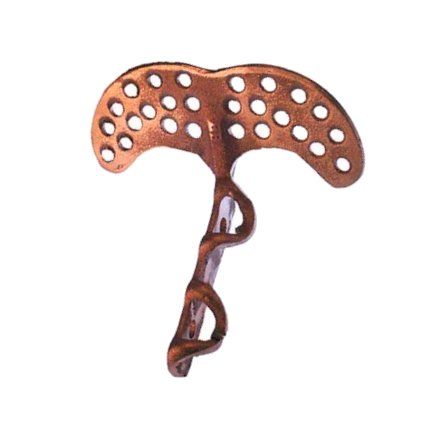
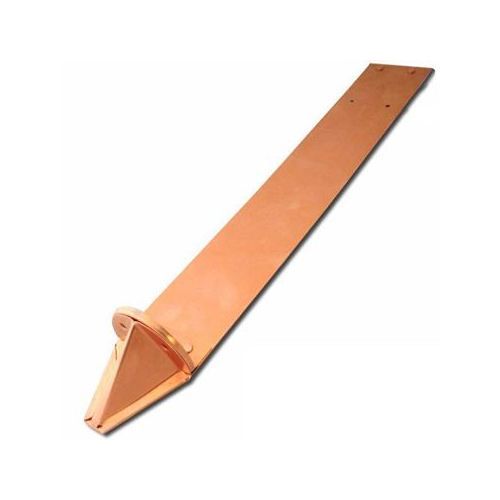
Snow guards for slate and tile roofs may use slotted bars, longer straps, loops, hooks, or cast guard faces. The concealed attachment generally extends beneath the roofing unit and transfers snow forces to an approved fastener, deck, batten, or other supporting component.
Slate and tile are not interchangeable roof systems. Selection depends on details such as:
- Natural slate, synthetic slate, clay tile, or concrete tile
- Roofing-unit dimensions and thickness
- Exposure and overlap
- Tile shape or slate configuration
- Existing fastener location
- Deck or batten construction
- New-construction or retrofit installation
A product approved for natural slate is not automatically compatible with synthetic slate. A tile guard may also be limited to flat tile or another specific tile profile.
Slate and tile can be brittle. Installation should not rely on an unsupported roofing unit to carry concentrated snow-retention forces.
Cedar Roof Snow Guards
Cedar roof snow guards are available for select cedar shake and cedar shingle applications. Product styles include loop guards and longer bar or strap assemblies that extend beneath the roofing.
Cedar shakes and cedar shingles can differ in thickness, exposure, taper, texture, fastener location, and installation pattern. Product selection should account for:
- Shake or shingle construction
- Roofing-unit dimensions
- Exposure
- Solid or spaced sheathing
- Underlayment
- Existing fasteners
- Roof age and condition
- New-construction or retrofit installation
Some cedar snow guards are integrated while the roof is installed. Others use an approved retrofit method. A new-construction product should not be modified or forced beneath an existing cedar roof to create an unapproved retrofit installation.
Asphalt Shingle Roof Snow Guards
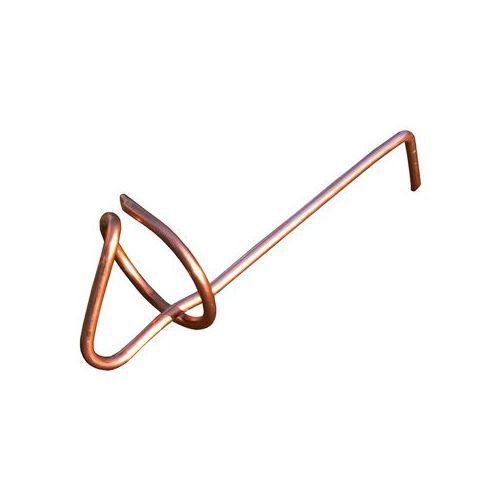
Asphalt shingle snow guards may use loops, slotted bars, solid straps, or related attachments positioned with or beneath the shingle courses.
Asphalt shingles generally provide more surface friction than smooth metal panels, but snow movement can still occur. Roof pitch, roof-slope length, snow density, drifting, freeze-thaw conditions, and roof geometry affect how snow accumulates and releases.
Before selecting a guard, confirm:
- Shingle type and thickness
- Shingle exposure
- Roof pitch
- Roof deck
- Existing fastener location
- Roof age and condition
- New-construction or retrofit application
- Roofing-manufacturer requirements
Older, curled, cold, or brittle shingles may be damaged when lifted. Use a retrofit product only when its installation method is approved for the existing roof.
Attachment Methods
Snow guard attachment is product-specific. The common attachment methods represented across these roof applications include seam clamps, structural adhesive, mechanical fasteners, straps, bars, loops, and hooks.
Seam-Mounted Attachment
Seam-mounted guards attach to compatible standing seams without penetrating the metal roof panel.
Selection and installation depend on:
- Seam geometry
- Clamp design
- Set-screw placement
- Panel material and thickness
- Roof coating
- Required tightening procedure
Use the clamp model and tightening requirements specified for the selected guard and roof panel. Over-tightening can deform the seam, while inadequate tightening may allow movement.
Adhesive Attachment
Select surface-mounted snow guards can be bonded to compatible roof panels with an approved structural adhesive.
A reliable bond depends on:
- Snow guard material
- Roof-panel material
- Factory coating
- Surface preparation
- Application temperature
- Adhesive quantity and placement
- Weather during curing
- Complete cure period
Use only the adhesive specified for the selected snow guard. Ordinary roofing sealant or general construction adhesive should not be treated as an automatic substitute.
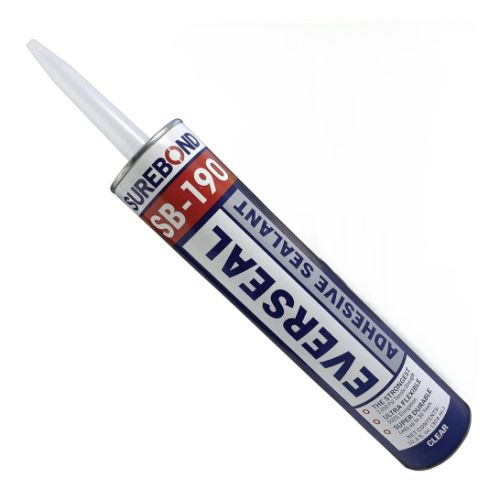
Clear SB-190 Surebond Everseal is available in 10.3 oz cartridges for compatible snow guard applications. SB-190 requires 28 days at temperatures of 50°F or above to reach full cure. Temperatures below 50°F can slow or stall curing.
SB-190 should not be used to attach snow guards to copper or lead roofs.
Mechanical Attachment
Mechanically attached products use screws, bolts, nails, or other specified fasteners to transfer snow forces into an approved supporting component.
Depending on the roof and product, the attachment may need to engage:
- Roof deck
- Structural blocking
- Purlin
- Rafter
- Batten
- Existing roofing fastener
- Another approved structural component
The roof sheet, shingle, slate, tile, or cedar unit alone may not provide the required anchorage.
Use the specified fastener material, size, washer, gasket, sealant, and supporting substrate. Do not create unapproved roof penetrations.
Bars, Straps, Loops, and Hooks
Slate, tile, cedar, and asphalt shingle products may use concealed bars or straps connected to an exposed guard face or loop.
Products that look similar can have different:
- Bar or strap lengths
- Slot locations
- Guard projections
- Attachment requirements
- Roof applications
- Materials
- Retrofit limitations
Review the complete assembly rather than selecting only by the visible guard shape.
Choosing the Correct Snow Guard
“Metal roof,” “slate roof,” “tile roof,” “cedar roof,” or “shingle roof” does not provide enough information to establish compatibility.
Collect the following information before selecting a product:
- Roofing material
- Roofing manufacturer and product
- Panel, seam, slate, tile, shake, or shingle profile
- Roofing-unit dimensions and exposure
- Roof pitch
- Eave length
- Eave-to-ridge distance
- Dimensions of each roof plane
- Building location
- Applicable snow-load information
- Valleys, dormers, and roof transitions
- Upper roofs that discharge onto lower roofs
- Areas below the eaves that require protection
- New-construction or retrofit installation
- Roof age and condition
- Preferred attachment method
Measurements should come from the installed roof or reliable roofing specifications. Do not select a guard only from a photograph or nominal roof description.
Materials and Finishes
Snow guard materials vary by product design and roof application. Available options may include:
- Clear polycarbonate
- Aluminum
- Bronze
- Copper
- Galvanized steel
- Stainless steel
- Brass or brass attachment components
- Plated or coated metal components
Material alone does not establish roof compatibility or snow-retention capacity. The guard design, attachment, roof construction, and layout must also be appropriate.
Natural copper changes appearance as it weathers. Copper, bronze, galvanized steel, stainless steel, aluminum, and plated metals also respond differently to moisture and exterior exposure.
Consider dissimilar-metal contact and water runoff when combining snow guards, fasteners, flashings, gutters, and roof materials. Copper contact or runoff can contribute to corrosion of aluminum, galvanized steel, and other more active metals.
Color and finish availability varies by product. Similar color names from different manufacturers may not match exactly in shade, texture, or gloss.
Determining Quantity and Layout
There is no universal number of snow guards required per square foot.
The required quantity and pattern depend on:
- Selected snow guard
- Roof material and profile
- Roof pitch
- Eave length
- Eave-to-ridge distance
- Roof snow load
- Guard and attachment capacity
- Valleys, dormers, and roof transitions
- Upper and lower roof sections
- Snow drifting
- Number and spacing of rows
Individual guards commonly work together in repeated or staggered patterns. Depending on the product and roof, the layout may require several rows between the eave and ridge.
Adding more guards to one low row is not necessarily equivalent to distributing guards through multiple rows.
Use the layout guidance or calculator provided for the selected snow guard. Complex roofs, high snow loads, unusual geometry, or structural questions may require review by a qualified roofing professional, architect, or engineer.
Localized Protection Above Entrances
A few snow guards placed only above a doorway, walkway, garage entrance, or short gutter section may concentrate snow forces into a limited area.
Snow from adjacent unprotected portions of the roof can move sideways toward the guarded section or place excessive force on a small number of guards.
Use a localized layout only when it is specifically designed for that roof and snow guard. A larger roof-section layout may be required even when the main concern is one entrance or walkway.
Snow Guards and Gutters
Snow guards may reduce the likelihood of a large snowpack sliding directly into gutters and downspouts. They do not guarantee protection from every snow, ice, or meltwater condition.
Snow guards should not be attached to or supported by the gutter unless the product is specifically designed for that purpose. Gutters and gutter hangers are not structural snow-retention systems.
When planning a snow guard layout, consider:
- Gutter height and location
- Roof overhang
- Guard placement
- Snowmelt drainage
- Ice formation near the eave
- Snow arriving from an upper roof
- Inspection and maintenance access
Retained snow can still create meltwater, icicles, and ice near the roof edge.
Snow Guards and Ice Dams
Snow guards do not prevent ice dams.
Ice dams involve conditions such as roof temperature, heat loss, air leakage, insulation, ventilation, snow cover, weather, and freeze-thaw cycles. Snow guards manage snow movement and should not be used as a substitute for addressing those building and roof conditions.
Ordering Considerations
Determine the complete roof layout before calculating the order quantity.
Confirm:
- Exact snow guard model
- Approved roof application
- Required quantity
- Number of rows
- Material or finish
- New-construction or retrofit attachment
- Required clamps, bars, straps, hooks, or fasteners
- Required adhesive
- Package quantity or unit of sale
- Components included with the product
- Components ordered separately
Some snow guards are sold individually even though a complete roof layout requires many units. Product packaging and included installation hardware vary.
A visible guard face, shoe, bar, strap, or replacement component should not automatically be treated as a complete snow guard assembly. Review which attachment parts are included before ordering.
Installation Planning
Follow the installation instructions for the selected snow guard and the requirements of the roofing manufacturer.
Before installation, verify:
- Correct snow guard and attachment
- Complete layout
- Number and location of rows
- Roof condition
- Attachment substrate
- Required clamps, fasteners, or adhesive
- Surface preparation
- Temperature and weather requirements
- Roofing warranty requirements
- Safe access to the work area
Do not substitute attachment components because they appear similar. Do not cut, drill, shorten, bend, or otherwise modify a guard, clamp, bar, or strap unless the product instructions permit it.
Adhesive-mounted guards should not be loaded, pulled, or relied upon before the adhesive completes its required cure.
Snow guard installation involves elevated and sloped roof surfaces. Use qualified installers, suitable roof-access equipment, personal protective equipment, and applicable fall-protection procedures.
Inspection and Maintenance
Inspect snow guards periodically and after significant snow, ice, wind, visible movement, or other roof work.
Check for:
- Loose or shifted guards
- Loose seam clamps
- Backed-out or corroded fasteners
- Adhesive separation
- Open sealant
- Cracked polycarbonate
- Bent or broken metal components
- Damaged coatings
- Dissimilar-metal corrosion
- Bent or broken bars and straps
- Disturbed slate or tile
- Lifted shingles
- Damaged cedar
- Roof leaks near attachment points
- Changes to the original layout
Inspection should include the roof attachment and surrounding roofing, not only the exposed snow guard.
Roof replacement, repairs, solar installation, chimney work, HVAC work, antenna installation, or gutter replacement can affect snow movement or disturb the original layout. Do not remove or relocate guards without reviewing the remaining system.
Frequently Asked Questions
What is a snow guard?
A snow guard is a roof-mounted product used with other guards in a planned layout to help control the movement of accumulated snow and ice.
What roof types can use snow guards?
Available products fit select metal, slate, tile, cedar shake, cedar shingle, and asphalt shingle roofs. The guard and attachment must match the exact roofing system.
Do snow guards make snow slide off the roof?
No. They are intended to resist sudden movement and allow retained snow to melt or release in smaller amounts.
Do snow guards prevent all snow and ice from falling?
No. Loose snow, meltwater, icicles, and smaller pieces of ice may still leave the roof.
Do snow guards prevent ice dams?
No. Snow guards manage snow movement. Ice dams involve roof temperature, heat loss, insulation, ventilation, air leakage, weather, and freeze-thaw conditions.
Do snow guards strengthen the roof?
No. The roof and attachment points must already be capable of supporting the forces transferred by the snow guards.
Are all metal roof snow guards interchangeable?
No. Standing-seam, ribbed, corrugated, exposed-fastener, and other metal panels can require different guards and attachments.
Can a standing-seam snow guard fit every seam?
No. Seam width, height, shape, material, thickness, and construction determine clamp compatibility.
Can snow guards be screwed through a standing-seam roof?
No, unless the roofing manufacturer and snow guard manufacturer approve the complete penetrating attachment for that panel.
Can adhesive be used with every snow guard?
No. Adhesive is used only with snow guards specifically designed and approved for adhesive attachment.
Is snow guard adhesive the same as ordinary roofing sealant?
No. Use the structural adhesive specified for the selected snow guard and roof surface.
How long does SB-190 take to cure?
SB-190 requires 28 days at temperatures of 50°F or above for full cure. Temperatures below 50°F can slow or stall curing.
Can SB-190 be used on copper roofs?
No. SB-190 is not recommended for attaching snow guards to copper or lead roofs.
Can the same guard be used on slate and tile?
Only when the product is approved for both roofing systems and its attachment fits the exact slate or tile construction.
Can snow guards be installed on an existing roof?
Yes. Select products have approved retrofit methods. Other products are intended to be integrated while the roof is installed.
How many snow guards are required?
The quantity depends on the selected product, roof dimensions, pitch, snow load, roof geometry, attachment, and required layout. There is no universal quantity per square foot.
Can snow guards be installed only above a doorway?
No, unless a layout is specifically designed for that localized condition. A small group of guards can concentrate snow forces and receive snow from adjacent roof areas.
Are clear polycarbonate snow guards invisible?
No. They may be less visually prominent, but the guard, adhesive, shadows, dirt, and weathering can remain visible.
Do snow guards protect gutters?
They may reduce exposure to a large sliding snowpack, but they do not guarantee protection from every snow, ice, or meltwater condition.
Are snow guards sold individually?
Many snow guards are sold individually, while packaging and included attachment components vary by product. Calculate the order quantity from the complete roof layout.
Do snow guards require maintenance?
Yes. Inspect the guards, attachments, surrounding roofing, adhesive, clamps, fasteners, and layout periodically and after significant snow or ice events.
Can snow guards be used as ladder supports or fall-protection anchors?
No. Snow guards are not ladder supports, work platforms, roof-access equipment, or personal fall-protection anchors.
What should be verified before ordering?
Confirm the roof material and profile, roof dimensions, pitch, snow-load information, new or retrofit application, selected guard, attachment method, approved layout, quantity, material, required accessories, and unit of sale.