

Buying Guide & Product Information
Gutter Tools and Equipment Buying Guide
Gutter tools and equipment are used to measure, cut, form, punch, crimp, fasten, join, install, clean, and maintain gutter and downspout systems. This category includes general sheet metal tools, gutter-specific fabrication tools, installation equipment, soldering supplies, jobsite accessories, cleaning tools, material-handling products, and tools made for particular gutter systems.
Tool selection depends on the work being performed, gutter or downspout profile, component size, material, material thickness, connection method, required working clearance, and level of fabrication involved. Some products can be used across several roofing and sheet metal applications, while others fit one component style, machine series, manufacturer, or gutter system.
Types of Tools and Equipment
Available products support several stages of gutter fabrication, installation, repair, and maintenance.
Major product groups include:
- Van Mark portable brakes, slitters, forming accessories, stands, supports, and coil-handling equipment
- Outlet punches for preparing gutter outlet openings
- End cap crimpers and snap lock punches
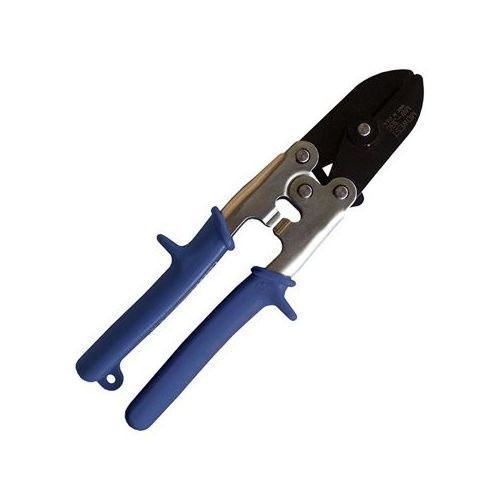
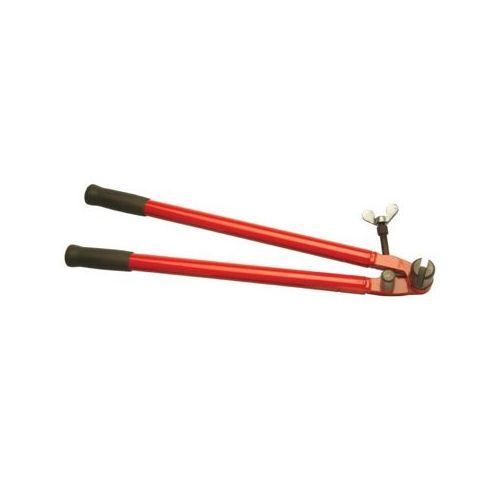
- Three-blade and five-blade downspout crimpers
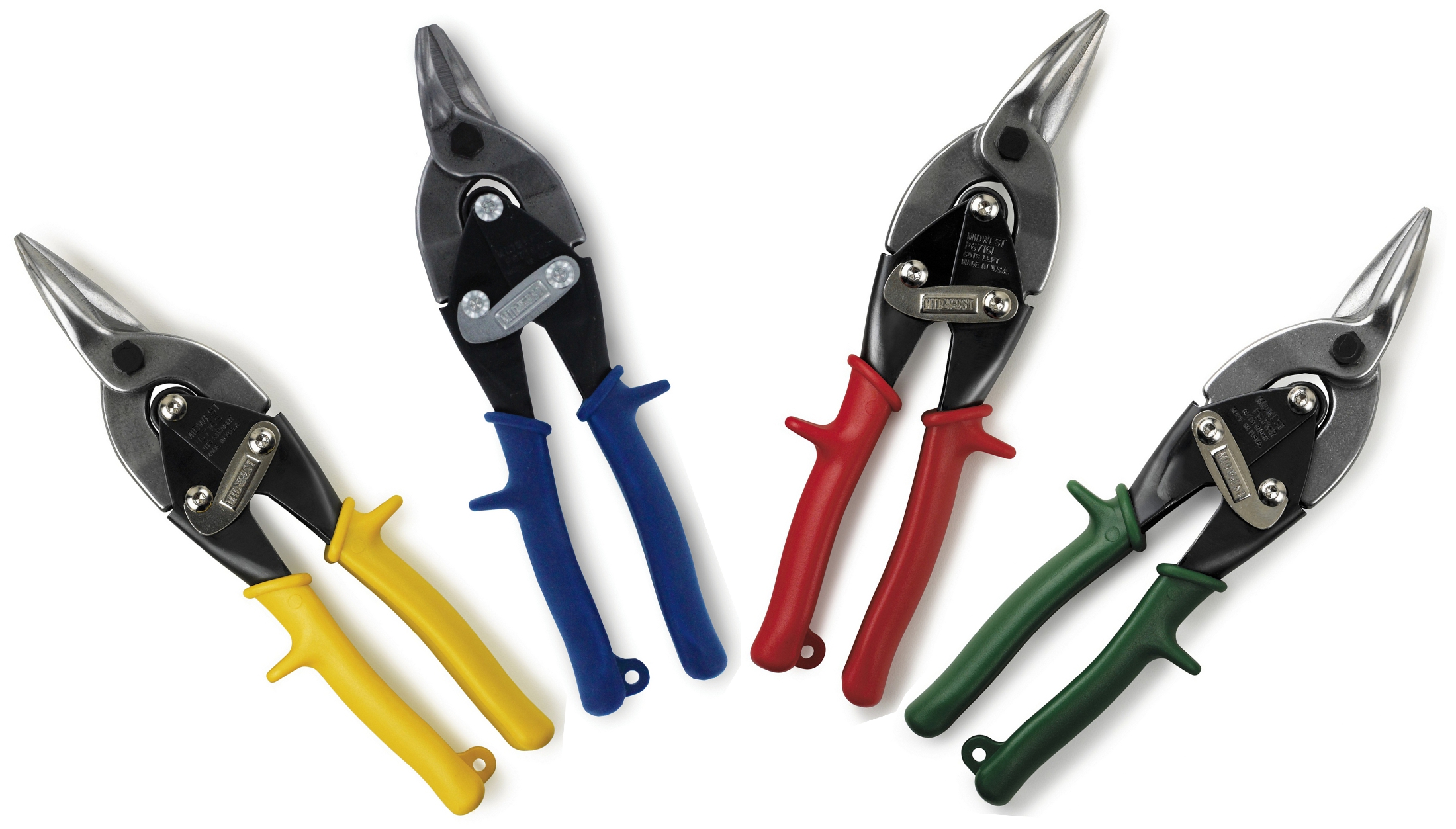
- Aviation snips, offset snips, bulldog snips, double-cut snips, tinner snips, and Andy snips
- Hand seamers and interchangeable seamer blades
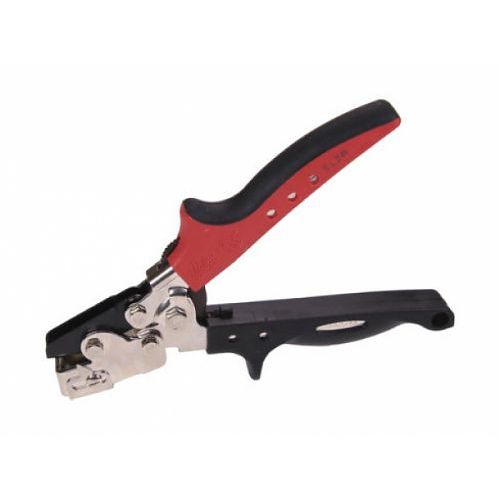
- Fixed-angle hand notchers
- Sheet metal folding tools
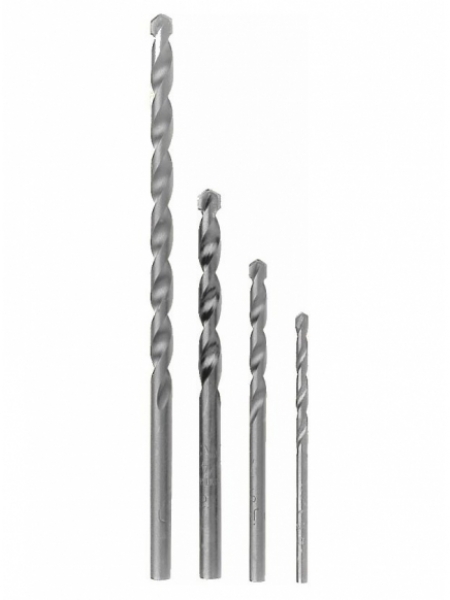
- Carbide-tipped masonry drill bits
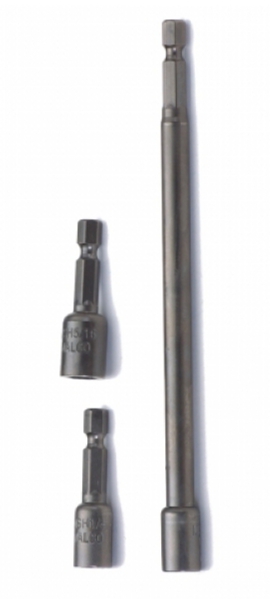
- Magnetic hex chuck drivers
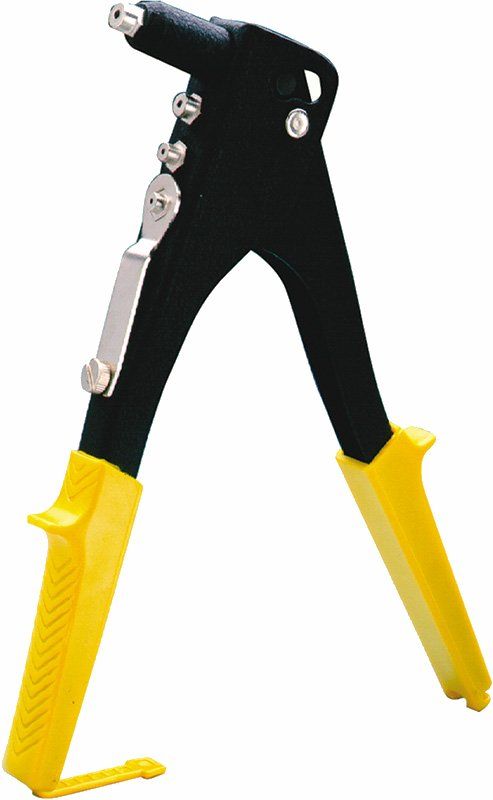
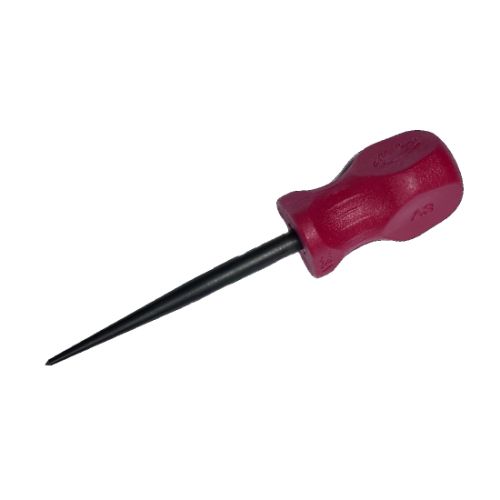
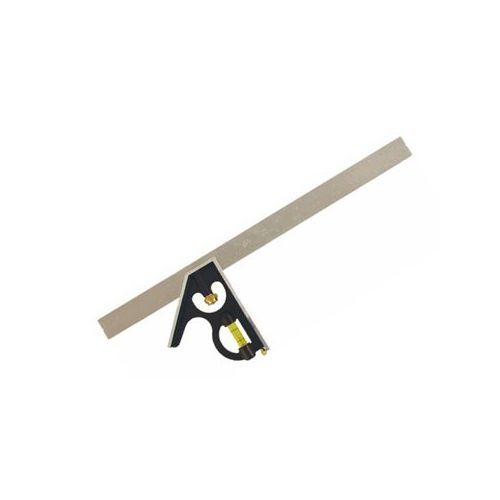
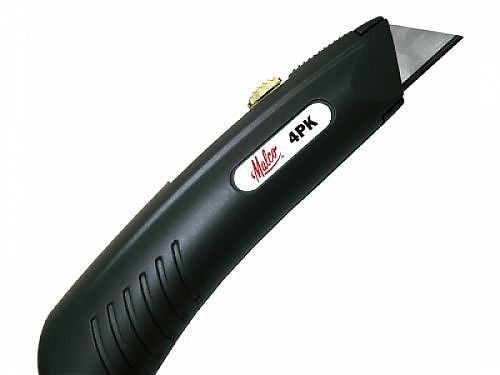
- Rivet tools, awls, utility knives, and combination squares
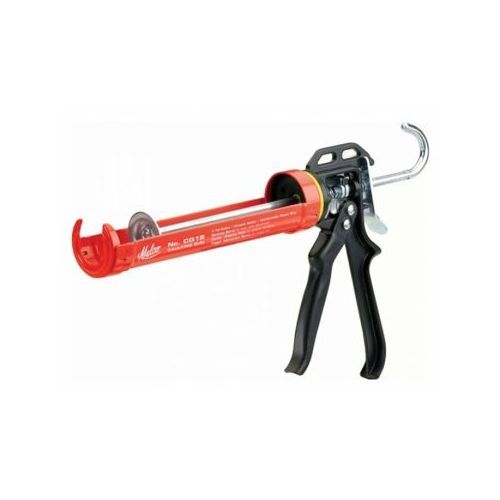
- Caulking guns for compatible cartridges
- Propane soldering irons, bits, hoses, regulators, solder, paste flux, and brushes
- Gloves for general handling and clean copper handling
- Gutter-holding tools, ladder accessories, and jobsite cleanup equipment
- Gutter cleaning kits, grabbers, scoops, and extension handles
- Euro Copper hanger-bending tools and downspout expanders
Size, material capacity, included parts, package quantity, and system compatibility vary by product.
Cutting and Trimming Tools
Snips, utility knives, notchers, and related cutting tools are used to prepare gutter, downspout, flashing, trim, siding, soffit, fascia, coil, and sheet materials.
Snips are available in different cutting configurations:
- Left-cut snips follow straight lines and curves toward the left.
- Right-cut snips follow straight lines and curves toward the right.
- Straight or combination-cut snips are used for straight cuts and wider curves.
- Offset snips position the handles above the material for added hand clearance.
- Bulldog snips use short jaws for notches, seams, and heavier compatible material.
- Double-cut snips remove a narrow strip of material as the tool advances.
- Tinner snips use longer blades for straight cuts and broad curves.
- Andy snips use aluminum handles and replaceable blades on compatible models.
The cutting designation describes the path of the cut rather than necessarily indicating which hand operates the tool. Tool capacity also changes with the material. A snip rated for Painted aluminum should not automatically be used on Natural copper, Galvanized steel, Galvalume, Paint Grip steel, Preweathered zinc, stainless steel, or several folded layers.
Before selecting a cutting tool, confirm:
- Material and finish
- Material thickness or gauge
- Copper weight or actual thickness
- Number of layers
- Straight, curved, or notched cut
- Required curve direction
- Length of the cut
- Clearance around beads, hems, seams, and corners
- Which side of the cut remains part of the finished component
- Whether replaceable blades are available
Keep cutting surfaces clean when working with Painted aluminum, Natural copper, Freedom Gray copper, Preweathered zinc, Copper Penny aluminum, or Designer Copper aluminum. Embedded metal particles and damaged blades can scratch or mark finished surfaces.
Hand Notchers
Hand notchers remove a fixed V-shaped section from the edge or corner of compatible sheet metal. They are used to create clearance between intersecting bends, prepare tabs, and form corner relief before folding or brake work.
Available Malco and Midwest tools create approximately 30-degree or 31-degree V notches. The notch angle and throat depth are fixed by the selected model.
A hand notcher is not a general-purpose cutting tool. It does not make:
- Rectangular gutter outlet openings
- Round holes
- Adjustable-angle notches
- Long straight cuts
- Curved cuts
- Downspout crimps
- Snap-lock projections
Use snips, an outlet punch, a drill bit, or another appropriate tool when the required opening does not match the notcher’s fixed geometry.
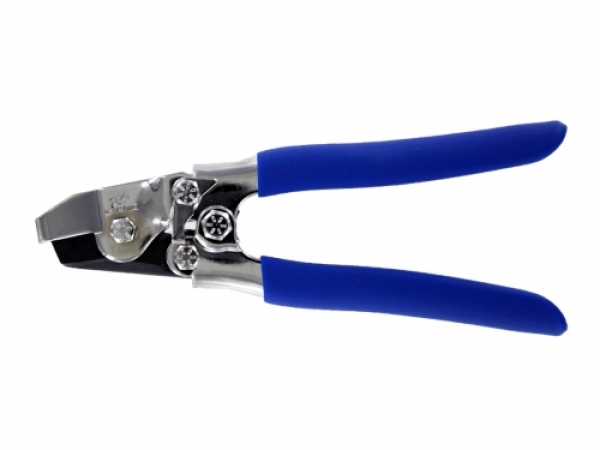
Hand Seamers
Hand seamers grip compatible sheet metal between opposing jaws so the material can be bent, folded, flattened, straightened, or adjusted.
Available styles include:
- Malco forged-jaw seamers in different jaw widths
- Midwest seamers with interchangeable forged-steel or extruded-aluminum blades
- Narrower jaws for tabs, corners, and limited-access details
- Wider jaws for broad flanges, fascia, soffit, and flashing work
Jaw width and jaw depth are separate measurements. Jaw width determines how much material is formed with each placement. Jaw or throat depth determines how far the material can enter the tool.
Hand seamers are useful for localized bends and field adjustments. A portable brake is generally more appropriate for long, continuous bends that must remain aligned across an entire trim or flashing section.
Material capacity must account for the complete assembly. A tool that can form one layer may not be able to close a hem or seam containing two or more layers of the same metal.
Sheet Metal Folding Tools
Folding tools create bends along the edge of compatible sheet metal using fixed-depth slots. They are commonly used for flashing, trim, fascia, soffit, and other field-formed details.
Folding tools differ from hand seamers:
- A folding tool uses a fixed-depth slot and is rotated along the material edge.
- A hand seamer clamps the material between two jaws.
- A folding tool is useful for longer edge bends.
- A hand seamer can also grip, flatten, straighten, and locally adjust material.
Choose the tool length and slot depth according to the bend width, available clearance, material thickness, and required finished profile.
Van Mark Brakes and Fabrication Equipment
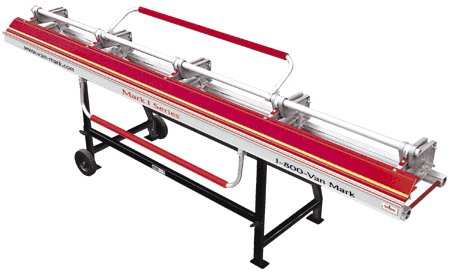
Van Mark brakes hold compatible sheet or coil material while the operator creates bends, hems, returns, flashing profiles, fascia coverings, siding trim, and other fabricated components.
Available brake families include contractor, deep-throat, heavy-duty, and industrial configurations in multiple working lengths. Brake series can differ in:
- Working length
- Throat depth
- Traditional or POWERslot hinge design
- Number of frame castings
- Number of operating handles
- Material capacity
- Equipment weight
- Included support equipment
- Compatible cutters and forming accessories
Working length and material capacity are separate specifications. A longer brake does not necessarily bend thicker metal. Throat depth also does not indicate material capacity; it determines how far the sheet can extend into the brake before the bend.
Van Mark equipment and accessories include:
- Portable bending brakes
- TrimCutters
- QuickScore tools
- TrimFormers and forming dies
- Trim-A-Slitters
- Coil cradles and dispensers
- Trim-A-Table cutting workstations
- UniLegs, stands, supports, and wheel kits
- Model-specific service and replacement components
Accessory compatibility depends on brake series, throat depth, frame or cam-lock design, working length, and sometimes the age of the brake. Confirm the exact brake model before ordering an attachment, stand, cutter, forming tool, or replacement component.
Large brakes and fabrication equipment also require planning for transportation, stable setup, working clearance, delivery, and unloading.
Outlet Punches
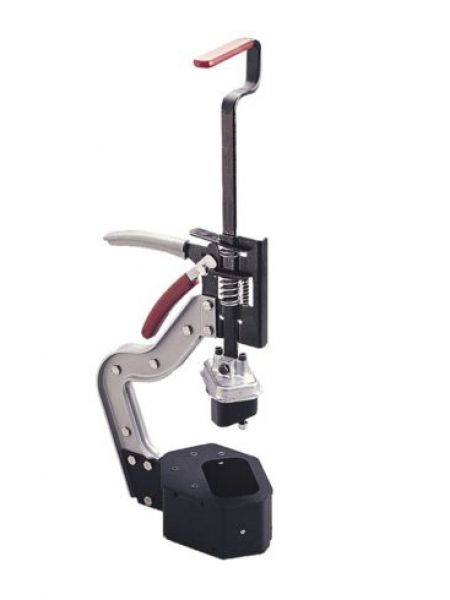
Outlet punches create repeatable openings in compatible gutters for outlet or downspout connections.
Malco ratcheting outlet punches are designed for compatible 5-inch and 6-inch K-style aluminum gutters up to .032 inch thick. They should not be treated as tools for Half round gutters, copper gutters, steel gutters, zinc gutters, vinyl gutters, or thicker aluminum unless the exact tool specifications approve the application.
Available cutting configurations include:
- Standard rectangular openings used with compatible drop outlets
- X-style openings that leave tabs for direct attachment of a compatible downspout
Outlet dimensions are not the same as gutter size. A 5-inch gutter or 6-inch gutter may use different outlet dimensions depending on the selected downspout and drainage design.
Outlet-punch products may be sold as:
- Complete tools
- Punch-and-die conversion kits
- Replacement blades
- Replacement ratchet components
- Model-specific service parts
A conversion or replacement kit requires a compatible punch frame and is not necessarily a complete operating tool.
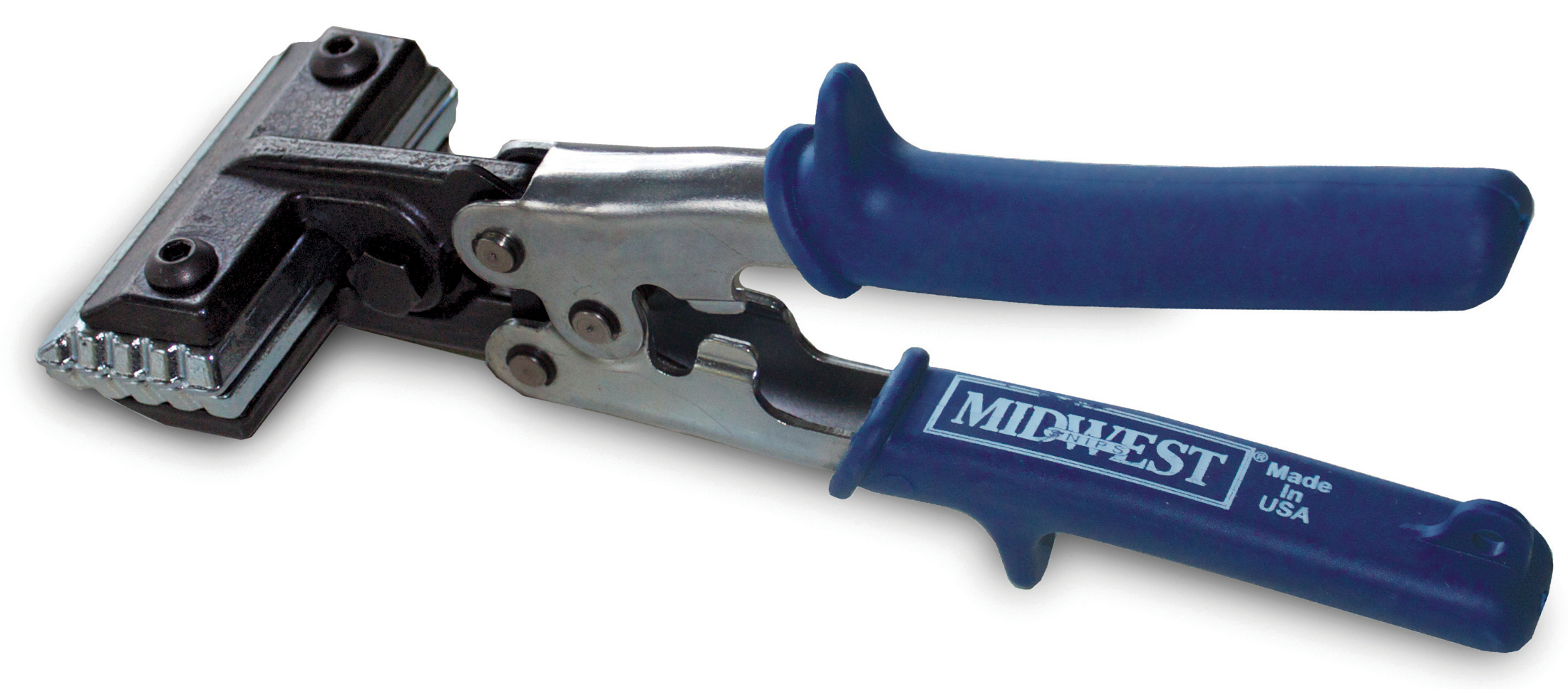
End Cap Crimpers
End cap crimpers form locking impressions across the overlapping metal of a compatible gutter and end cap.
Available configurations include:
- Malco adjustable snap lock punches
- Midwest gutter end cap crimpers
- Midwest end cap and PermaTab crimpers
These tools produce different crimp patterns. Depending on the model, the tool may form:
- A single adjustable-depth locking tab
- A double inside crimp with a louvre-style outside crimp
- A louvre-style crimp used for compatible end caps or PermaTabs
The crimper does not make an incorrect end cap fit the gutter. Confirm the gutter profile, gutter size, material, left or right orientation, end cap shape, overlap, and sealing method before crimping.
A mechanical crimp retains the end cap. Compatible sealant may still be required to seal the joint.
Downspout Crimpers
Downspout crimpers reduce and corrugate the end of a compatible downspout section, elbow, offset, or extension. The crimped end becomes the male side of the connection and inserts into the adjoining component.
Available tools include:
- Midwest three-blade gutter crimpers
- Midwest five-blade gutter crimpers
- Malco five-blade gutter downspout crimpers
The gutter-specific models form a 1-1/4-inch crimp pattern. A similarly named duct or stovepipe crimper may have different jaw geometry and throat depth, so the complete model number matters.
Three-blade tools form fewer corrugations with each squeeze and may provide added control around corners and limited-access areas. Five-blade tools form a broader pattern with each squeeze and can reduce the number of placements required around the component.
Crimping prepares the male end but does not complete the joint. The connection may also require compatible screws, rivets, tabs, solder, or sealant.
Standard rectangular downspout crimpers should not automatically be used on plain round, corrugated round, or Euro Copper downspouts. Round systems may use factory-expanded ends, slip sockets, soldered joints, or system-specific expanders.
Fastening and Hole-Preparation Tools
Drill bits, chuck drivers, rivet tools, awls, and related products are used to prepare holes and install compatible fasteners.
Masonry Drill Bits
The carbide-tipped drill bits represented here are intended for compatible brick, concrete, masonry, granite, tile, and similar mineral-based materials. They may be used when downspout brackets, pipe clips, conductor heads, or other exterior components require masonry anchors.
These masonry bits are not sheet metal bits. Drilling a metal bracket before drilling into brick or concrete may require a separate bit designed for metal.
Choose the masonry bit according to:
- Substrate
- Anchor specifications
- Required hole diameter
- Required drilling depth
- Drill chuck
- Rotary or rotary-percussion mode
- Available clearance
The anchor manufacturer determines the required bit diameter and hole depth. The bracket opening, screw-thread diameter, and anchor-hole diameter are not necessarily the same.
Magnetic Hex Chuck Drivers
Magnetic hex chuck drivers install or remove compatible external hex-head screws and fasteners.
Available socket sizes include:
- 1/4 inch
- 5/16 inch
Those measurements describe the female hex opening that fits over the fastener head. They do not describe the screw-thread diameter or necessarily the power-insert shank. Malco magnetic drivers use a 1/4-inch power-insert shank in compatible configurations.
Available lengths include short, long, and extra-long drivers. A longer driver can provide clearance around a gutter bead, bracket, downspout, or trim component, while a shorter driver can provide greater control where the fastener is exposed.
Impact compatibility is model-specific. Use an impact driver only with a driver identified for impact use.
Rivet Tools and Awls
Rivet tools install compatible blind rivets used in gutter, downspout, flashing, and sheet metal assemblies. Match the riveter nosepiece and tool capacity to the rivet diameter and material.
An awl can mark or start selected holes in compatible material. It is not a substitute for a drill bit, punch, or fastener-specific hole-preparation method where a controlled hole diameter is required.
Caulking Guns and Sealant Application
Caulking guns dispense compatible sealants and adhesives from cartridges. The available gun is sized for standard 1/10-gallon cartridges.
Before ordering or using a caulking gun, confirm:
- Cartridge size and shape
- Sealant or adhesive type
- Required thrust
- Application access
- Nozzle configuration
- Surface-preparation requirements
The gun does not determine which sealant is appropriate. Select the sealant according to the gutter or roofing material, joint type, exposure, and manufacturer instructions.
Natural copper, Freedom Gray copper, Painted aluminum, Galvanized steel, Galvalume, Paint Grip steel, Preweathered zinc, and vinyl may require different sealants or joining methods.
Soldering Irons and Accessories
Soldering equipment is used to join compatible metal gutters, downspouts, flashing, outlets, miters, pans, and related sheet metal components.
Available equipment includes two distinct Sievert systems:
- Basic Pro 86 soldering iron kits with manual ignition and a flint striker
- Promatic soldering iron kits with integrated Piezo ignition
The Pro 86 and Promatic systems use different handle, burner, ignition, and connection designs. Burners, hoses, neck tubes, bits, and related components should be matched to the exact system.
Soldering products include:
- Complete iron kits
- Hammer-style and pointed copper bits
- Propane hoses
- Regulators
- Compatible fuel components
- 50/50 tin-lead bar solder
- Paste flux for copper and brass
- Acid and flux brushes
Solder and flux are material-specific. Products intended for Natural copper should not automatically be used on Freedom Gray copper, Preweathered zinc, Galvanized steel, Galvalume, Paint Grip steel, stainless steel, or Painted aluminum.
Soldering requires suitable training, ventilation, fire precautions, fuel-system inspection, and personal protective equipment. A soldered joint may also require mechanical locks, tabs, rivets, or other support according to its design.
Gloves and Material Handling
Available gloves include:
- Leather Palm Gloves for general work and material handling
- Copper Wonder Gloves with a cotton body and latex-coated palm for handling Natural copper while reducing direct skin contact and fingerprints
These gloves are sold by the pair.
No general-purpose glove protects against every sheet metal, chemical, heat, electrical, or rotating-equipment hazard. Select gloves according to the task and any documented cut, puncture, abrasion, chemical, or thermal rating.
Keep copper-handling gloves clean and separate from steel debris, sealant, flux, dirt, and abrasive materials. A contaminated glove can transfer marks to Natural copper, Freedom Gray copper, Preweathered zinc, Painted aluminum, Copper Penny aluminum, or Designer Copper aluminum.
Loose glove material can become caught in drill chucks, saws, slitters, rollers, and other rotating equipment. Follow the equipment instructions when determining whether gloves should be worn during powered operation.
Installation Supports and Jobsite Equipment
Some products support the work rather than cutting or forming material.
Available equipment includes:
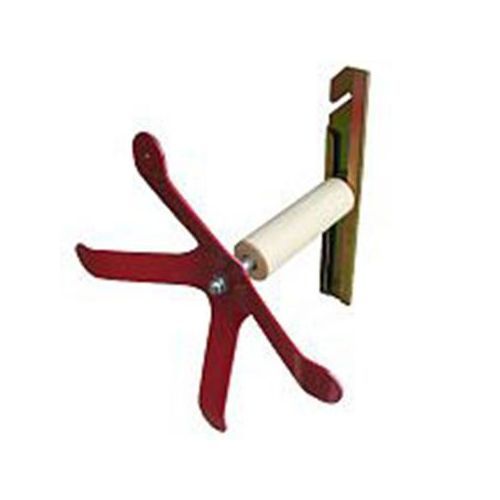
- Gutter-holding tools that support a gutter section during installation
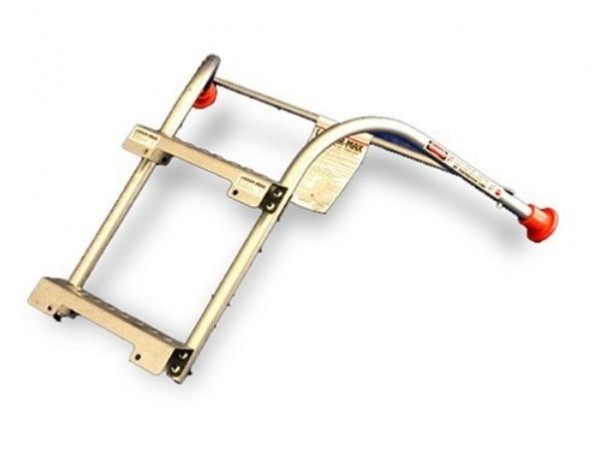
- Ladder stabilizing accessories
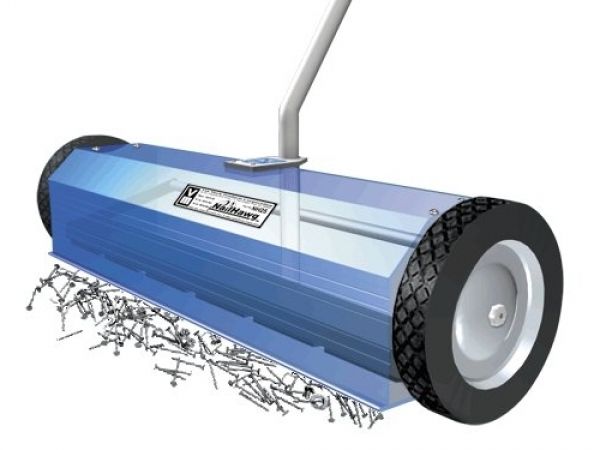
- Magnetic sweepers for collecting ferrous fasteners and jobsite debris
- Measuring and layout tools
- Combination squares
- Utility knives
- General-purpose jobsite accessories
These products perform different functions. A gutter-holding tool is not a permanent gutter hanger, and a ladder accessory does not eliminate the need for correct ladder selection, placement, inspection, and use.
Never use a gutter, gutter hanger, gutter guard, downspout, or rain chain as a ladder support, step, or fall-protection anchor.
Gutter Cleaning Tools
Gutter cleaning tools remove leaves, pine needles, seed pods, twigs, roofing granules, dirt, and other loose debris from compatible gutters.
Available products include:
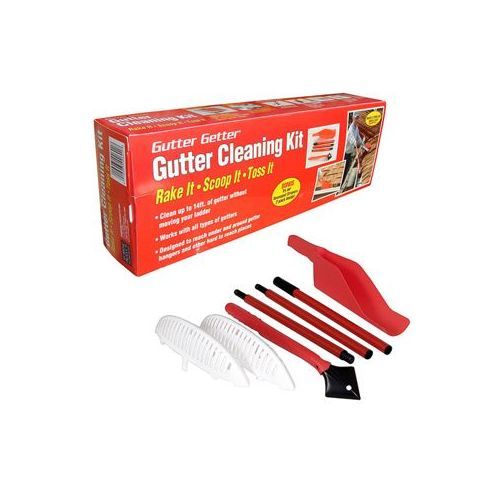
- Gutter Getter cleaning kits
- Gutter Grabber debris rakes
- Flexible Gutter Getter scoops
- Extension handles included with select kits
The Gutter Getter kit combines a scoop, grabber, and 42-inch extension handle. The grabber pulls debris toward the working position, and the scoop lifts it out of the gutter.
Tool fit depends on:
- K-style, Half round, or vinyl gutter profile
- Gutter size
- Interior shape
- Hanger arrangement
- Outlet position
- Installed gutter guards
- Debris condition
- Available access
Cleaning tools should not be forced beneath hangers, guards, miters, outlets, or connectors. They also should not be used to chip ice, remove hardened sealant, or push large debris piles into the downspout.
Gutter guards reduce some debris entry but do not eliminate inspection and maintenance.
Euro Copper System Tools
Some tools are designed specifically for Euro Copper components.
The Euro Copper bending tool is used to shape compatible J-style roof hangers before installation. It should be matched to the hanger style and intended roof or fascia attachment.
Euro Copper downspout expanders are sized for compatible metric European downspouts. They expand the end of a component to create the receiving side of a connection.
A Euro Copper expander should not be selected for a standard U.S. plain round or corrugated downspout based only on a similar nominal diameter. Metric dimensions, actual diameter, wall construction, and connection design must match.
Choosing Tools for Different Materials
Material and thickness affect cutting force, forming pressure, surface protection, and tool capacity.
Painted Aluminum
Painted aluminum is used for gutters, downspouts, flashing, soffit, fascia, and trim. Use tools rated for the aluminum thickness and keep cutting and forming surfaces clean to reduce scratches.
Copper Penny aluminum and Designer Copper aluminum are painted aluminum finishes, not Natural copper.
Mill Finish Aluminum
Mill finish aluminum can show scratches, oxidation, dirt, and handling marks. Use clean tools and confirm thickness before cutting, punching, crimping, or bending.
Natural Copper
Natural copper requires tools compatible with the copper weight or thickness. Keep steel particles, rough surfaces, dirty gloves, and damaged jaws away from visible copper.
Freedom Gray Copper
Freedom Gray copper has a coated exterior surface. Follow the material-specific requirements for cutting, forming, soldering, cleaning, and handling the coated face.
Galvanized Steel
Galvanized steel has a zinc coating and may require greater tool capacity than comparable aluminum. Confirm the exact gauge and avoid unnecessary damage to the coating.
Galvalume
Galvalume uses an aluminum-zinc alloy coating and is not the same as Galvanized steel. Do not transfer tool capacities, soldering methods, or edge-treatment instructions between the two without supporting specifications.
Paint Grip Steel
Paint Grip steel is treated galvanized steel intended to accept paint. Confirm the tool capacity and any joining or surface-preparation requirements for the complete component.
Preweathered Zinc
Preweathered zinc requires clean, smooth, compatible tools. Avoid embedded steel particles, excessive repeated bending, and unnecessary abrasion of the finished surface.
Vinyl
Vinyl generally requires different cutting and fastening practices from sheet metal. Avoid using tools that can crack, crush, spread, or disconnect vinyl components.
Compatibility Checklist
Before ordering a tool, confirm:
- Gutter profile
- Gutter size
- Downspout shape and dimensions
- Round-product diameter where applicable
- Material
- Material thickness, gauge, or copper weight
- Tool model
- Jaw, blade, punch, socket, or bit dimensions
- Working length or throat depth
- Complete tool, kit, accessory, or replacement part
- Primary-tool or machine compatibility
- Included components
- Separately required consumables and accessories
- Power-tool or fuel-system connection
- Package quantity
- Shipping and unloading requirements
A tool should not be selected by appearance alone. Similar tools can have different throat depths, material capacities, connection systems, or intended applications.
Ordering Tools and Equipment
Tools may be sold individually, by selected model or size, as a kit, or in package quantities. A product image may include accessories used to demonstrate the equipment that are not part of the purchase.
Before ordering, determine whether the product is:
- A complete operating tool
- A kit
- An accessory for another tool
- A replacement blade, jaw, die, bit, or service component
- A consumable
- A stand or support
- A selected size or model
- An individual unit or multipack
Common separately ordered items include:
- Brake stands and wheel kits
- Cutters and forming dies
- Punch-and-die conversion kits
- Replacement blades
- Rivets and fasteners
- Sealants
- Solder and flux
- Propane cylinders
- Drill bits
- Chuck drivers
- Replacement soldering bits
- Cleaning-tool components
Large brakes, slitters, tables, and fabrication equipment may require common-carrier delivery and a planned unloading method.
Tool Care and Maintenance
Maintenance requirements differ by tool. Follow the manufacturer instructions for the exact model.
General care includes:
- Remove metal shavings, sealant, flux, dirt, and debris after use.
- Dry tools before storage.
- Keep cutting jaws, punch surfaces, sockets, and forming faces clean.
- Inspect blades, jaws, dies, bits, pivots, handles, springs, and latches.
- Check hoses, regulators, valves, and fuel connections before soldering.
- Inspect stands, wheels, supports, and mounting hardware.
- Replace damaged or worn cutting components.
- Lubricate moving parts only where directed.
- Protect measuring surfaces and depth markings.
- Keep tools used on finish-sensitive materials free of abrasive particles.
- Store soldering equipment only after it has cooled.
- Protect carbide tips and precision edges from impact.
- Keep replacement parts identified by manufacturer and model.
Do not continue using equipment with cracked handles, loose jaws, damaged blades, bent shanks, leaking fuel components, misaligned punches, unstable supports, or other defects that affect operation.
Jobsite and Installation Planning
Plan the complete operation before beginning work.
Consider:
- Sharp sheet metal edges
- Flying chips and metal cutoffs
- Hot surfaces and molten solder
- Open-flame and propane equipment
- Rotating drills and drivers
- Tool kickback or binding
- Heavy or awkward equipment
- Stable support for long gutter sections
- Working clearance around the component
- Ladder and roof access
- Weather conditions
- Electrical lines
- Suitable eye, hand, hearing, respiratory, and foot protection
- Control of debris and falling objects
Specialized tools improve consistency and efficiency only when they are correctly matched, maintained, and operated. They do not replace training, safe access, accurate layout, or the manufacturer’s instructions.
Frequently Asked Questions
What tools are commonly used to install gutters?
Common tools include measuring and marking tools, snips, drills, hex chuck drivers, outlet-cutting tools, end cap crimpers, downspout crimpers, rivet tools, caulking guns, and equipment for supporting the gutter during installation. Soldered, custom-fabricated, masonry-mounted, or Euro Copper systems require additional tools.
Does every gutter installation require an outlet punch?
No. An outlet punch is useful when its opening dimensions, material capacity, and gutter-profile compatibility match the planned connection. Other installations use a drill-and-snip method, a factory outlet, or another approved opening method.
Can an aluminum outlet punch be used on copper or steel?
No. Malco gutter outlet punches are made for compatible K-style aluminum gutters within their stated thickness limit. Copper, steel, zinc, vinyl, and Half round gutters require a different cutting method unless a specific punch approves the application.
Is an end cap crimper the same as a downspout crimper?
No. An end cap crimper forms locking impressions across a gutter and end cap. A downspout crimper reduces the end of a downspout section or fitting so it can enter another component.
Can one downspout crimper fit every downspout?
No. Rectangular, plain round, corrugated round, and Euro Copper downspouts can use different connection methods. Match the tool to the component shape, dimensions, material, and thickness.
What is the difference between a hand seamer and a folding tool?
A hand seamer clamps material between opposing jaws and can bend, flatten, grip, or straighten it. A folding tool uses a fixed-depth slot to create an edge bend.
When is a sheet metal brake needed?
A brake is used when long, straight, repeatable bends are required in compatible sheet or coil material. Hand seamers and folding tools are better suited to short bends, local adjustments, and limited-access work.
Does a longer brake bend thicker material?
No. Working length and material capacity are separate specifications. Select the brake by its published capacity for the exact material, alloy, temper, and thickness.
Will every Van Mark accessory fit every Van Mark brake?
No. Compatibility depends on the brake series, throat depth, frame design, working length, cam-lock configuration, and accessory model.
Are Pro 86 and Promatic soldering parts interchangeable?
No. The systems use different handles, ignition arrangements, burner connections, and hose configurations. Match each component to the specific Sievert system.
Do all soldering iron kits have Piezo ignition?
No. Promatic kits use integrated Piezo ignition. Pro 86 kits use manual ignition and a separate flint striker.
Can copper solder and paste flux be used on every gutter metal?
No. Solder and flux must match the base metal and joint. Products intended for Natural copper should not automatically be used on Freedom Gray copper, Preweathered zinc, Galvanized steel, Galvalume, Paint Grip steel, stainless steel, or Painted aluminum.
Are the drill bits intended for sheet metal?
No. The carbide-tipped bits are intended for compatible brick, concrete, masonry, granite, tile, and similar materials. Sheet metal requires a bit designed for metal.
What do 1/4-inch and 5/16-inch chuck-driver sizes mean?
They describe the female hex opening that fits over the fastener head. They do not describe the screw-thread diameter.
Can every hex driver be used with an impact driver?
No. Use an impact driver only with a chuck driver identified for impact use.
Are gutter cleaning tools compatible with gutter guards?
Compatibility depends on the guard design and whether the gutter interior remains accessible. Some screens, covers, and filters must be opened or removed according to their instructions.
Do gutter guards eliminate gutter cleaning?
No. Guards can reduce debris entry, but the guard surface, gutter, outlet, and downspout still require inspection and maintenance.
Are work gloves cut-resistant?
A glove is cut-resistant only when it has a documented cut rating appropriate for the task. Leather Palm Gloves and Copper Wonder Gloves should not be assigned an unsupported protection level.
Are Copper Wonder Gloves made from copper?
No. They use a cotton body with a latex-coated palm and are intended to improve grip and reduce direct skin contact while handling Natural copper.
Will standard round downspout tools fit Euro Copper downspouts?
No universal interchangeability applies. Euro Copper tools are sized for compatible metric European-system components and must match the actual downspout diameter and connection design.
Are accessories pictured with a tool included?
Included parts depend on the selected product or kit. Stands, wheels, dies, cutters, batteries, hoses, regulators, fuel cylinders, fasteners, sealants, and replacement parts may be sold separately.
How are tools and equipment sold?
Products are sold individually, by selected model or size, in package quantities, or as kits. Check the ordering unit and complete list of included components before entering a quantity.